Ellen’s running diary ~ part 2

IMG_1540

Running Blog Take 2

Royal Parks 1/2 Marathon for UP and CRPS UK
RP

12/08/2017

Well it’s been a very busy start to this weekend, what with having to cover a shift at my old restaurant job Friday night and working today. I thought I would be shattered but I was surprisingly energised! Enough to ask my dad if he was around to go for a run this morning when I got home from work! For once he was actually around and free so we could go. However, we had an extra runner with us today in the form of our four-legged family member, Cooper. This meant that for the first time I went running in a national park rather than on roads.

I wasn’t sure how it was going to go because of the difference in terrain but Dad and I agreed that we would run one loop and see how we felt before deciding whether to run a second loop! Dad and I hadn’t been out together for a while and we were not sure how Cooper was going to be but it was a really nice easy run, apart from the few times Cooper decided to run right under my feet!

The terrain was hilly and the ground was mostly sand which did make the run slightly harder than I have previously don however once I was in my breathing rhythm the run was almost natural! We did the first big loop followed by another smaller loop and although the lactic acid was starting to kick in. I felt like I could carry on however it was starting to get warm and Cooper was getting tired so we called it a day. We ran 2.5 miles which I was extremely happy with! And we agreed that we would both take our running gear on holiday with us next week so we could do some more training together, although it will have to be early in the morning as do not think I could run in the Italian sun!

13/08/2017

Today I’m not writing about my marathon journey but about my normal 22-year-old life. Everyone will have to make some sacrifices in their lives; whether it is big or small and I am no different. When I was 15 I didn’t think making sacrifices would be that difficult but now at the age of 22 they do become more of a challenge. The challenge doesn’t actually come from the sacrifice, I’m pretty good at sticking to them, the challenge comes from the judgements of others!

So at the age of 22, clubbing with friends has become a part of my life and I love to dance! The issue comes with the second part of a normal night out…….alcohol! Now I do not actually like the taste of alcohol that much but in the right mood I can enjoy a vodka cranberry or two however when you are on daily epileptic medication that’s changes. Anyone on a similar medication will know that it really does not mix (trust me I tried on my 18th Birthday!) which means when I go out clubbing with my friends, I am designated driver.

Neither me or my friends are bothered by this as we all know I can still enjoy myself without the alcohol but I am still surprised by how offended others get! Constantly being asked “Why!?” or “How can you be here without drinking?” or “Come on surely you can have one?” begins to get boring and repetitive. I do not like telling people that I’m on medication as soon as I meet them, because frankly why do they need to know but in my experience people will push and push until I mention the medication. As soon as that is mentioned, people back off but I do not see why I could not just go out without drinking anyway! As long as I enjoy myself what does it matter!!

At 15 sacrificing the ability to wear high heels was not a big deal to me but now obviously I want to wear the nice heels that match my new dress when I go out clubbing! Wearing heels hurts but I can manage it but wearing heels and showing off my best dance moves is a little harder!

Luckily if I go clubbing, I go out with very close friends who know exactly what my situation is. Whenever I go out I always carry my emergency pills and my medical ID in case and my friends are always aware of this but that is not what makes me feel safe and secure when I am out. What does, is the fact that my friends are able to tell when I am struggling and so will make me take a seat, take my pills or suggest going if it was bad enough! Knowing I have that support even in that environment makes me enjoy it even more!

Tonight I went out clubbing with my best friend and we had an amazing time! However tonight was one of the nights I had to take the option of leaving when it got painful and as soon as we were out of the club, the heels came off! But it was and always will be worth it!

16/08/2017

A nice break in the sun is what most people look forward to in the summer but for myself and other CRPS sufferers, spending time in the sun comes with its own issues.

A main complication of CRPS is hypersensitivity, which means extreme changes in temperature and exposure to direct sunlight can cause increases in pain or worse a complete flare up. This has happened to me many times in previous years however being 6 years into my disorder means I have found ways to avoid this happening or dealing with whatever does happen. Unfortunately this wasn’t the case for me last night. I am currently on holiday with my family in our lovely new house in he Italian hills! It is so lovely and the weather is amazing but this just meant I sat outside in the sun all day long yesterday!

This meant that while at dinner with my family last night I suffered a flare up in my knee and hip. Luckily we had stayed in for dinner last night so when the pain started I was able to take myself up to my own room and deal with it on my own, like I would at home. After 20 minutes I re-joined the family for ice cream and laughs just slightly frustrated and crippled!

Today I woke up knowing it was going to be a rough day, which automatically put me in a bad mood. I try not to allow myself to stay in bad moods for very long anymore as they do not help the pain but sometimes you can’t help just feeling frustrated and angry! Because my knee was still extremely painful I chose to spend the day inside out of the sun and heat, to try and calm it down. This is what frustrated me because I am on holiday, so all I should be doing is spending the day out in the sun, with a good book and dipping my feet in the pool.

As frustrating as it was to be stuck inside all day, the plan was that I did that for the day so that tomorrow I can go back out and enjoy the sun! So fingers crossed!!

19/08/2017

So the day inside on Wednesday worked!! Yesterday I was back out in the sun, swimming in the pool, and good as new! After having an extra day just to double check my knee was better, Dad and I agreed to get up early this morning to go for a run down along the sea front. We agreed to leave at 6am so we were on the sea front by 6:30am when it was still fairly mild.

I overslept slightly we didn’t actually get down to the sea front till about 7am and it was already 21 degrees!! I was hot before I even started running. The running was surprisingly easy however the heat caused some issues both in respect to the increased difficulty in breathing and also the fact my knee got very hot under my brace and so began to hurt!

We did 2.7 miles, which doesn’t seem a lot but considering the temperature, we were both shocked! I find the running a lot easier when I am with Dad as it keeps me going when if I was on my own I might give up! I am hoping this will help me on the race day!

29/08/2017

The last 10 days since being back have been so busy, which is why I haven’t had chance to sit down and right down a blog in that time. It is also because I haven’t had chance to do anything in the last 10 days because I have been so busy with work and other things.

Today was the first evening I had free to be able to go out for a run since the run in Italy. It had been a warm day and the temperature only let up a little bit when I went out. I had a vague idea of where I was wanting to go however I didn’t make the decision on where my turning round point would be. I just wanted to run and enjoy it. I did 2.7 miles again which although isn’t much again, really was the best I felt I could do and for me that’s all I can do is my very best!

When I got back Dad was doing some skipping training and considering I have not skipped since before my injury, I thought it might be fun to try it and see how I got on! I was surprised at how good I was at it considering I have a bad knee and also had just done a run. There is a competition at my gym for the first person to do 200 skips in a minute will win a prize, so that’s my next aim!

31/08/2017

So, this morning, I had a personal training session at the gym. My calves where so tight after my run Tuesday night and because I then walked round London shopping yesterday! Unfortunately, I am too honest and so told my personal trainer this, who then decided to stretch my legs out for me. I almost cried!

Because I had done my run, we decided to focus on weights and core work rather than my cardio. Being a rider, my core should be good however I haven’t ridden properly for about 6 months so was not very hopeful that it would be as good as I wanted it to be! However, I was pleasantly surprised! There is a challenge at the gym to see how long you can swing from two rings, that are hung from the ceiling, with your knees bent at a 90-degree angle. I gave it a go thinking I would last about 2 seconds however 20 seconds later, I was still holding on! My best time today was 25 seconds, which put me as leader for the ladies! Not sure how long I will stay leader though so need to do some more sit ups I think!

03/09/2017

Well today wasn’t a great way to end the weekend. After my positive week with my run Tuesday, seeing the psychologist on Wednesday, going to the gym on Thursday and then having another amazing night out on Friday, I was very happy and content with my week. However, this morning I woke up with my ankle tingling and my knee feeling like it had an ever-expanding amount of pressure inside it, I knew today might not be all that great! Nevertheless, I got up as normal at 5:45am, went down to my horse then went to work. While at work I began to suffer some stabbing pain within my knee and severe pain at the bottom of my ankle. I kept having to have breaks, so the work took me longer than usual. I started work normally, but left work limping and unable to put weight through my ankle.

This may seem strange to many people but this is a normal flare up for me. I will tend to be able to feel one coming now a day’s due to having had the disorder for many years but I can never tell exactly when it will happen. Therefore, I carry on doing what I am doing at that time because if I stop it might not happen for another few hours, in which time I haven’t done anything I had planned to do, which is frustrating. I will also tend to be walking normally up until the point the stabbing pain starts because I do not like making it obvious that I am in pain to others. I know how to best deal with the pain so having others surrounding me, asking me “Are you alright?” or “Can I get you anything?” doesn’t help as it just draws more attention to it which makes the pain worse because I am more stressed out. I understand it is people’s human nature to want to help someone who is clearly in pain but as many of my family and friends know, I just prefer to be ignored.

The best example I have of this is when one day about a year ago I suffered a flare up while out food shopping with my mum. I had suffered a flare up a few days before so was limping as the pain was still dying down from the last one. When I am like this I always push the trolley as I use it as a slight aid to help me get around the shop. My back or hip (I cannot remember all of them as I have so many) started to flare up and I was stuck in the middle of M&S, hunched over a trolley, crying my eyes out. Everyone began to stop and stare, wondering what was going on so my mum carried on walking, heading to one of the refrigerated sections. I slowly followed her, still crying but aware that when I started moving again people stopped staring. It was at this point, while I was feeling a giant stab in my back that my mum has walked back across to me, with two packets of sausages in her hands and said, “Which ones do you think we should get Elz?” If I wasn’t crying at the time I could have laughed but what she did worked. The pain stopped in that second so I could stand back up and look at her and tell her which ones we should get!

People will probably read this and think, why didn’t my mum instantly drop everything to make sure I was okay but the thing is this is exactly what I tell family and friends to do when I have a flare up. I hate my disorder and the attention it brings so when it does flare up, especially in public I get highly embarrassed, which causes the pain to get worse. What my mum did that day was distract me. She stopped me thinking about the pain and all the people staring at me so that I could calm myself down enough to stop the pain. And once she knew I was out of the major pain then she asked me if I was okay.

I guess I am writing about this today because I think it is important for people to understand that every person will experience pain differently to the next person. That also means we all deal with pain in different ways too. Some use pain killers, some soldier on through and some learn to manage it. However, none of these options are a wrong option if they work for the individual person. No one or the people closest to that person should be judged for how they deal with their pain, as everyone is different. Needless to say, I did not take any pain killers that day and both my family and I carried on as normal and by the end of the day my pain had halved. So, although today was full of pain, it was a good day, full of pain!

04/09/2017

Well after yesterday I was extremely surprised to find that I got out of bed normally this morning, and then walked normally. It was a very nice quick recovery! I was just hoping it was going to last considering I had organised before the weekend to go out on a long run with my dad while at work today, and unfortunately, he hadn’t forgotten.

He said we were going to run 10km, which I think is the furthest I have ever run in one go in my life, so I was nervous already, let alone adding the fact I had been crippled in pain yesterday! But I was determined not to let him down as he is training to run with me on 8th October. Although, I was so nervous, I did not talk to anyone in the office all morning! I think everyone thought I was sick!!

At lunchtime, my dad, Jane (a colleague) and I all got changed and then we set off aiming to do 10km, with Cooper tagging along as well! The pain started off okay and I felt good. My dad even had to tell me to slow my pace down at one point, else I was going to run out of steam. The thing with my running is that my cardio fitness is actually very good considering I ride horses, have a very practical job and now go to the gym once a week but my issue is when the pain kicks in. After the first 15 minutes, I started to feel like there was a knife jammed into my knee cap, which is digging in every time I step down onto my left foot and releasing when my left foot comes off the ground again. This was happening on every step, so if you can imagine how many times that was happening while I was running you might think how on earth did I keep running. Trust me it is hard, and it takes all my energy and will to keep my left foot going in front of my right foot because I know the pain will not stop. But I also know that if I do not keep running and try my absolute hardest I will feel like I have failed and that could lead to me giving up, and right now that is just not an option for me! So, I keep running and just keep saying to myself (normally out loud) “It’s not real!”

I got about half way before the second amount of pain started. So, not only was my knee feeling like it was being ripped apart but then my hip started to feel like it was going to pop out of the socket (It would never actually do this, this is just one of the pains I suffer due to the CRPS!). I almost stopped so many times but I just kept thinking if I stop now, I won’t start again because I will want to avoid the pain. It’s always at moments like these, when I am starting to doubt myself that my amazing dad comes up beside me asking me if I am okay. It is like he knows what I am thinking and knows I need a distraction to keep me going! I never tell him I am in pain while we are running as I do not want him to make me stop but I always think secretly he knows, but he is kind enough not to say anything.

It felt like it went on for hours but then the end was in sight and it took all our strength to keep going but we did it. I thought my leg was jelly when we did make it back but I had manged to run pretty much all of it and I wasn’t sick at the end!! This is when dad checked his phone which had been recording out run and he gave a nervous sort of smile before announcing that we had run further than 10km. We had actually run 11.77km which is 7.1miles! That is half of the total amount that I have got to run! Once I had got some air back to my lungs and cooled my leg down enough that the pain began to subside, I let out a huge smile. If a year ago you told me that today I would run 7 miles I would have laughed in your face and told you to leave me alone. I could never have seen myself ever being able to achieve that but now all I want is more!! So my determination for this half marathon doubled today and there is no way I am stopping now!!

05/09/2017

The positivity from yesterday has died down a bit! My calves are so tight I do not want to lift my feet off the ground, my knee is aching and I feel like my right foot is completely bruised!! Luckily, I had today off so after doing my horse I went home and relaxed watching movies all day. However, this evening I did have a pre-booked personal training session with my brother as my normal Thursday slot was not available this week!

I haven’t really had any pain today, which is very surprising but I was still tired after yesterday! Nevertheless, I headed off to the gym with my brother hoping for a bit of an easier session today. I did not let him know straight away this time that I had been for a run yesterday as I wanted to avoid the stretches! So instead the personal trainer made me start by skipping. This is when I wished I had asked for the stretches because both my calves and knee began to really hurt! But, I carried on and started to feel my calves loosening off although my knee was really beginning to hurt.

In the end, I had to tell him about the run (which he was impressed about) and tell him my knee was hurting with the exercises we had been doing so he adapted mine for me so I could still train while not hurting myself more. This is why I like coming to see my personal trainer because he knows that I do suffer some quite bad pain with some of the exercises but that I am also determined to carry on and try to do them, so instead of telling me to stop he just changes them and then pushes me to do my best! It may seem like a really small insignificant thing, but to me it is much more than that! It makes me feel normal at the gym which I have never felt because before coming to see him the only time I had been in a gym was when I was doing my physical physio. It also makes me enjoy the session even though I am in pain!

We did a lot of weight exercises and the personal trainer was laughing as I was using one weight less than my brother when doing the bicep curls!! Clearly all the lifting of full wheelbarrows does the trick!!

Migraines are a common cause of suffering

Stressed and frustrated asian business womanBBC News reported on the problem of migraine this week, interviewing a sufferer about the impact upon her life. Similar to other chronic pain problems, the social dimension must be a focus of treatment. Surely this is a medical problem you say!

The BBC spoke with a neurologist who was asked about the causes and treatment options. Standard and expected questions were posed, to which the doctor answered: genetics, certain triggers before outlining the different types of drug. Nothing wrong in those biomedical responses of course and this is what the listeners would anticipate. However, there is so much more to the pain experience and hence possibilities. These were not mentioned so I shall fill in the gaps.

Whilst there is a medical aspect in as much as the person needs a diagnosis and the option of medication, this does not give them the opportunity to learn about the condition, how it manifests in them and what they can do to transform it. Some may say that they don’t want to transform their experience and would rather take medication; a short cut. However, the medications do not always work, your life can continue to be dominated by the ‘what if I have a migraine?’, the effects can change over time and of course there can be side effects.

This is not to say that drugs do not have a role, as they clearly do in migraine and other painful conditions. But if we widen the picture and see the reality, there is a person with a life within society that is living the experience. This is the context that has implications for treatment, training and coaching.

How does this affect the person and their life?

What must we think about? Here are a few examples:

  1. How does the experience of migraine affect the person’s work, family, relationships and social engagements?
  2. How do these effects then impact upon the person and their life?

The modern way to address pain is using the biopsychosocial model. This way of thinking is a doff of the hat to the biology of pain (physiology, pathology etc), the psychology (how the person thinks and feels about their pain) and the social impact (what does this mean for their life and what can the person do?). Having spoken to and worked with people suffering chronic pain for many years, it is the social dimensions that predominate in effect together with the way they think and feel (based on their beliefs about pain, themselves and the world). People are not so interested in the chemicals, receptors and the brain as examples, and why would they be? When you are in pain you want to, you are compelled to take action to bring about a change in state: from protect to healthy. One of the main problems is that the person with chronic pain will be ‘in’ or ‘near to’ a protect state for much of the time. They must learn how to change state using a range of practices.

We are whole unique people ~ read about WUPs here

Living life with a smile

We change state often through each day. That is normal. However, if the protect state predominates, then we can suffer the consequences in many ways. Pain is one way, but there can also be feelings of anxiety, tension and a range of common ‘ills’ such as irritable bowel syndrome, headaches, fibromyalgia, chronic musculoskeletal pain, jaw pain, pelvic pain and others that result from being on alert. A state of readiness like this uses much energy, it is exhausting, and affects concentration, memory and mood as we adapt and change biologically and behaviourally over time. We learn. Sleep is typically affected because as we lay down, our system check out the environment for danger (lions!) and so we remain awake despite chronic tiredness. Being on alert means that we are ready to fight, run or freeze, all of which require musculoskeletal action. This manifests as tension but we are continually ready to act, especially in a new environment, which is why going somewhere different can be threatening and worrying.

Migraine is also one of these common functional pain syndromes. The physiology of migraine certainly involves the brain but there is a body in which we live, where our thoughts are embodied and we act in the world. The biological changes that occur in migraine and in other pain states are sampled by the brain and given a meaning. If the interpretation is one of threat which results in a state of alert and protection. It is the latter that can result in pain, because pain is part of the way we protect ourselves in the face of an uncertain threat.

How dangerous are bright lights? They can be unpleasant and cause us to look away or close our eyes, yet in the migraineur they can trigger an incredibly potent response that is mighty in bringing that person to a halt. The systems interpret that as being potentially very dangerous. In a predictive processing context, the brain ‘predicts’ that the possible causes of the sensory information are such that my experience is one of migraine. Of course this has a different ‘feel’ in different people including pain, sensitivity to light and sound, nausea and vomiting.

Employers have a role to play ~ pain is a social issue

A focus of the BBC interview was upon employers and how they perceive migraine. We can extrapolate this to any chronic pain condition in as much as without true understanding, there is typically little support. Work and chronic pain have not traditionally been good bedfellows, yet with such numbers of people suffering and the escalating costs to society, this is no longer a debatable point, it must change. At a basic level, surely we want to look after each other and our employees? There are positive changes afoot thankfully, but this must accelerate. Let’s run an example to illustrate the problem.

The person who suffers migraines worries that the symptoms will affect her performance. This raises the pressure. They suspect or know that they receive little sympathy or support from their employer. This raises the pressure further. Stress responses, like pain, emerge in the face of a perceived threat and hence the very thought that your job may be under threat has an impact. This is a simple account without even considering other demands in life. Even from this example you can see how the problem can be amplified. The employer may claim that they cannot afford to have an employee who is off regularly. The counter to this is that they could support an approach that gets the best out of that person because they feel supported — e.g./ positive strengths based coaching. They are not having time off because they want to! The essence of the positive team is to get the best performance from individuals and the team, supporting each other with a purpose and driving towards a shared vision. With open communication and a compassionate approach in the workplace, this can be achieved.

Migraine and the body ~ where am I?

There are many adaptations associated with a persistent pain state. This includes changes in the brain, especially in the emotional areas, which is why we feel different beyond just the sensory qualities or intensity. The world looks different, we think differently and we move differently. Our body can have a different feel as the sense of where we are becomes blurred and less accurate. You may notice being a little more clumsy or awkward. Body sense is inherently part of whom I am and therefore when that aspect of ‘me’ changes, I do not feel myself. Most people I ask will tell me that they don’t feel like themselves. There is a mismatch between what they expect and what is actually happening. In fact, this creates a threat and hence drives us towards a protect state.

You don’t know where your head is at….

People I see with migraine, some coming direct for that problem and others telling me about it when I ask (I always ask!), commonly demonstrate a loss of sense of where their head is in space. ‘You don’t know where you head is….in the nicest possible way’ I say to them.

Keeping our eyes level is a basic survival mechanism that allows us to see the world and look out for possible danger. Naturally this involves keeping our head position upright, which in turn relies upon accurate and efficient sensorimotor control. Anything that affects this is inherently threatening, and we adapt very well. But there is a cost that includes muscles tension from overwork and guarding, which hurts, and altered movement patterns. With the existence of possible threat, the autonomic nervous system is doing its job (working with other systems, in particular the immune system) and preparing us for a fight or to run away. This includes blood flow changes together with the shift in our attentional bias, emotional state and perception that are co-ordinated in a multi-system fashion. In terms of migraine, these mechanisms are all at play.

This is a very brief look at the complexity of how we work, yet one can see from this description how problems emerge in us, but also what we can do. For example, simple practices of creating inner calm to mobilise the parasympathetic nervous system and body sense training are practices we can learn deeply so that we become skilled at shifting state.

As with all chronic pain states, we can choose the positive approach. This means that we decide upon the way we think about the challenge, focus on a vision of what we want and then follow principles and practices to achieve successes. The programme of practices will vary from person to person as we all have our own picture of what we want to achieve in life. The Pain Coach Programme by its very nature is flexible to the needs of the individual but follows the framework of success, using the principles of practice, understanding and compassion.

Everyone wants to lead a happy and healthy life in a sustained way. To enable this to happen we must choose a way onward that keeps this picture in line with our thinking and our actions that are entwined, or embodied, and lived uniquely by the person. Each moment is fresh and new. We change, we grow and we learn, all setting the scene for achieving that healthy, happy life according to the choices we now make.

Please visit the Specialist Pain Physio website for more details of the coaching and treatment programme, Pain Coach

WUP

What is a WUP?

You know that I believe strongly in the whole person approach to overcoming pain. But there’s another element that is important to acknowledge and incorporate into our thinking. That is the uniqueness of each person.

W ~ whole

U ~ unique

P ~ person

WUP!

What does this mean practically?

When we think about what the person needs to get better, it is exactly that, what they need. This will be communicated in different ways and our job is to gain a grip on this vision or picture of what it is the person wants. It is the person as much as the condition, should be our guide. This is because each condition manifests in a particular way, emergent in that particular individual.

The individual has his or her story. Nothing happens in isolation as we are on a continuous timeline. No-one knows how we create this sense of a continuum as a ‘self’ or ‘me’, yet that is how it transpires. We continually learn and update as our brains sculpt themselves to try and explain the possible causes of the sensory information it receives. Of course our brains have no access to the world or our bodies. There is just the flow of electrochemical signals to make sense of, or guess the meaning of, in the light of prior experience.

“It has taken my whole life to get to this point”

Everything that happens now is upon what has come before. This story of my life is special and unique to me. The person arriving with a pain problem to be solved has taken their whole life to get there, in a sense. Certainly there is a uniqueness to them and their narrative, which holds a great deal of the information we need to gain insight into their suffering. Given the space and time, most will tell you all that you need to know when you gently guide the conversation.

There are no separate parts to the person, only a whole. Reductionist thinking is rather convenient, but does not represent the reality. It is not my mouth that is thirsty, instead it is me. It is not my foot that is pain, it is me. The experience is embodied as is my thinking about it for where else could this happen. You cannot separate out the thinking, perceiving, acting dimensions of the lived experience. Much like the impossibility of separating the blueness or skyness of a blue sky.

Whilst this can appear to be more complex than a model that suggests where we feel something is all there is (the biomedical model), the whole person approach offers far more opportunity. On a simple level this is because whole person-ness affords us the possibility to capture the reality of the lived experience. Realising this, the uniqueness slips in quietly as an obvious yet understated factor.

And there we have it, in a shortened version. WUP. The whole unique person approach to pain, or anything in life.

Richmond Stace

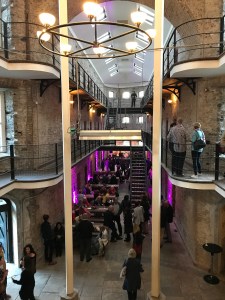
CRPS Cork 2017 Day 1

‘no pain no gain’ (??)

There are always key moments in a day’s full programme, and there was one that stood out yesterday. More on that shortly.

We started with a walk through of the known predictors for CRPS by Dr. Andreas Goebel. Over the years, Dr. Goebel has become a well known figure in the world of CRPS, so it was good to see him kick off proceedings after an introduction from Dr Dominic Hegarty.

Risk Factors pre-trauma include age over 50 years, being female, suffering migraine, osteoporosis, asthma and taking ACE-inhibitors. Immediately post-trauma we should assess for the pain intensity (more pain, more risk), a lack of exercise, the fracture type, musculoskeletal co-morbidities and perhaps pre-existing PTSD (post traumatic stress disorder).

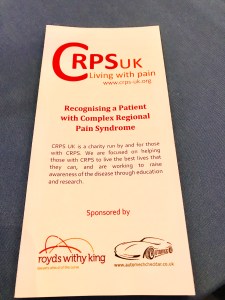
This is a key area for clinicians and our ability to recognise the likelihood that a person could develop CRPS. In honing the awareness and skills, this can only get better, which would translate into less suffering. Jumping ahead to the last part of the day, CRPS UK launched their new information leaflet that specifically targets the lack of knowledge and understanding.

The morning rolled on as we were treated to performances from the CRPS pop-stars. A gig typically gets going with the headline act at the end of a day of progressively bigger bands taking the stage. We started with a ‘main event’ as Lorimer Moseley entered the room via a video link.

Lorimer’s urine

Having shown off about his white, urine coloured wine as he described it, Lorimer gave us a typically witty yet informative talk. Always entertaining, LM is equally sharp in his observations from data, thereby keeping a firm foot in science. Admirably, he emphasised one of the often neglected aspects of being human in these situations — bias. Our declarations when speaking set the scene and let the audience know who we are (a bit).

The focus of Lorimer’s excellent work is certainly the brain. He has a way of transmitting the information in such a digestible way that most presenters would pay for a few of his (brain) cells. Together with the ability to make the listener feel on a par, this makes for easy listening whilst looking at some dots on a graph. I would not make head nor tail of those dots, but LM makes it engaging and everyone comes away knowing what they mean as well as an insight into the rigours of doing science well.

If there was a criticism it would be about the focus on the brain rather than the person. However, it is up the the clinicians and therapists to gather the presented information from the different speakers and form a bigger picture. Regular readers will know that my beliefs (and there will be bias in these of course) sit with the whole person approach, which is why Tim’s (Beames) talk softened the blow of data by bringing the human element to the room.

Tim and I have emerged from a similar place and whilst we will have our unique take, our interests lie in the person and that person learning to reduce their suffering. We both know that people can do this with the right ‘know-how’.

“The whole person approach is a must”

GMI (graded motor imagery) has been a big mover in CRPS. Tim was keen to point out that this is not a method to use in isolation, which I am sure everyone would agree with. In the physio world, over the years, there has often been the search for the recipe, the one treatment mode that will help. Littered with ‘gurus’, physio education has suffered as a result. I think and hope we are moving beyond this now. Integrated education when we share platforms with different disciples must be a way forward. Certainly in the Pain Coach Programme I want a range of clinicians and therapists so that we can create super teams with a shared vision, a focus on our strengths and each person knowing why they do what they do as a minimum.

Shock of the day goes to Robert Van Dongen as he described an approach whereby the person with CRPS receives hands on manual therapy that looks agonising. I say ‘looks’ because he treated us to a video of a foot and ankle being massaged and moved with audio. The noises coming from the recipient suggest it was not pleasant. The folk on my table who have CRPS winced and looked away, I felt something in my foot. It was provocative viewing! But, this is what is happening so we should discuss the treatment philosophy and work out whether it does have any long-term benefits. I am not sure. I will not be adopting this mode readers may like to know.

“Watching someone have a painful experience triggers real emotions and sensations in me”

The patients receiving the therapy were clearly motivated to undertake the programme. The short term pain of the treatment out-weighed the ‘pain’ of trying something else. There was a reward somewhere — maybe the relief of the heightened pain easing off! A key point here with a motivated patient is that they are likely to do well with any functional programme because they have prioritised and committed to taking actions in line with getting better. Would these people do equally well with a standard programme?

The shock wore off and we settled into a solid and well thought out talk on the team approach from Candy McCabe. I am into ‘teams’ and in particular ‘super teams’ so I was very pleased to hear Candy speak about some of the important principles. Great teams do great work but this necessitates a good leader, a vision, a recognition of individual and team strengths, engagement, and compassionate communication at the very least.

Bring a touch of the real world to the end of the day, we heard from two clinicians who described their experiences. Together with Victoria from Burning Nights, these stories brought the day to a conclusion as we moved from data, science and theory to what actually happens and the phenomenon of the lived experience. At the end of the day, it is this lived experience that is important. A person suffering CRPS, do they need to know about chemicals, brains, nerves etc, or do they need to know that they can be ok and that they can get better? For me that’s a no-brainer.

Whilst I agree that people must understand their pain (of course I do!), this is a practical knowing. The Understand Pain & Pain Coach Workshops deliver the knowledge, skills and know how, with the last element a vital part of the make-up. Without know-how, we don’t know. Not knowing results in fear, worry, and a hit and miss approach versus a knowing that leads to confidence, control and an outlook of being well.

Through the day there was acknowledgement that this is a difficult condition to treat and address for the person and clinicians. Traditionally thinking, yes this is true. But as with anything, if we start by saying how hard it will be, we are pre-empting. We are creating a lens of ‘difficultness’ through which we push everything else.

There is a choice to be had. What would happen if we used the lens of possibility and opportunity? We are designed to change and have inherent mechanisms of getting better. The offerings of a whole person approach tap into our potential as amazing human beings as opposed to focusing on a body area, a brain, a particular treatment approach. The reality is that we are all unique and hence there is no single way of dealing with a condition. And that is because we are not dealing with a condition, we are helping a human being overcome a challenge and how that manifests in them. The plea here then, is to stop trying to fit a round peg into a square hole. See things for what they are and address each person in the ‘personalised’ way that they need and deserve. I will write more on the ‘how’ of this subsequently.

So, with that all in mind, we move onwards into day 2……

If you would like to talk to me about UP and our positive work to drive social change, please do get in touch. UP delivers a range of workshops to deliver knowledge, skills and know how to overcome pain

You can email me here mailto:painphysiolondon@gmail.com

CRPS 2017 Conference in Cork

CRPS UK charity for complex regional pain syndrome

Richmond is heading to Cork with the CRPS UK crew

I am looking forward to the CRPS Conference this week for a number of reasons. The primary reason and purpose is to connect with others who want to drive social change in terms of pain. I will be representing UP of course, and encouraging people to join our community as we forge forward with enterprising work to change the way society thinks about and addresses pain.

Pain is embedded within society and hence is a social problem. You could also call pain a public health problem, with both terms more accurately defining the nature of the issue. Pain is not a medical problem.

Conferences for particular conditions are often dominated by clinicians and scientists. Whilst these groups must be there, so should patient representative organisations, policy makers, MPs and others who must play a role in the much needed change. The best example of this in action was the recent SIP conference in Malta when every group was present to discuss how we can move onward and the next steps.

Sadly, I have neither seen nor heard any positive reverberations in the UK from this key meeting. All the work is going on in Europe. I hope the UK will wake up. I will certainly keep nudging until we do together with my friend and co-conspirator, Pete Moore. Coming soon, we have some short videos of recent conversations we had about pain ~ sign up to the UP website and you’ll receive notification.

The CRPS conference will be a chance to talk to researchers about their new findings. Naturally I can read their papers, but the chance to chat and connect is vital. We need much more interaction between those in healthcare and those doing the research. The science must be distilled into something that can be consumed by all, which is another of UP’s purposes.

I will be tweeting from Cork, so keep an eye on Twitter @painphysio and follow me if you don’t already. Blogs will appear here and on my ow site: Specialist Pain Physio and on Facebook


Helping others is distinctly healthy ~ a great story from Ghana

DSC_1326.JPG

The Helper’s High

Increasingly we are understanding the healthy benefits of practices that we can adopt in an effort to live a long and happy life. This is highly relevant to the millions of people who suffer chronic pain across the globe.

To suffer chronic pain is to be consistently in a state of protect. Pain is a feature of this state and whilst it is temporary and transient, the person experiencing chronic pain will frequently exist in such a state. Developing skills to shift into a healthier or ‘care-giving’ state (as I call it with people I work with) is fundamental to overcoming pain. With this in mind I have invited contributions from people who have volunteered to do positive work to gain insight into how it made them feel.

You may be wondering how someone with hugely impacting chronic pain could engage with such work. Indeed it would be a challenge for many and to some seem impossible. However, with some thought and planning, volunteering to help others can come in many forms. This benefits all — the giver and the receiver. And like any practice, the more it is done, the easier it becomes. We can all access the ‘helper’s high‘. So, here’s a fascinating story about a recent journey to Ghana to do positive work.

Introducing Kenny Webster

I have recently been on a journey, both physical and metaphorical. I would like to share parts of this journey with you, if you can spare a few moments and I promise to try and not be too smug about it. I am one of those people who has always worked hard and despite warnings from friends and family over the years, I almost certainly worked too hard and too long. By training, I am a research biochemist, but after several years of lab research, I became more involved in the public engagement side of science and eventually ended up working in the science museum sector – inspiring others in the beauty of science. In a working life of over 20 years, I only ever took one day off sick, never used my full annual leave allowance, started early, left late and often went in to the lab/ office at the weekends – sound familiar? Relationships with friends fell by the wayside and I essentially became totally engrossed in work, always telling myself that I was doing a lot of good for a lot of people. This might have been true (the jury is still out), but I certainly didn’t save any lives and I definitely didn’t earn a bucket load of cash that I might have tried to buy happiness with – as I perceive some other people try to do!

DSC_1198.JPGA couple of months ago, I was made redundant. At first, there was shock, but then the rational side of me kicked in and I acknowledged to myself that over the previous few months, I had actually been pretty miserable at work and at least this was going to be an end to that. As I thought through my options, I started to recognise just how much of my personal time was given over to work and that I would actually be getting all of that back as well – it was going to be an opportunity to start again, but without actually having to choose to start again! I decided that I was not going to panic and find a new job, any job, as soon as possible, but instead I was going to do something amazing and meaningful with the time that I now had. I was going to do something that I would have considered myself crazy and irresponsible to have done under normal circumstances. So I went to Ghana for a month and volunteered on community projects.
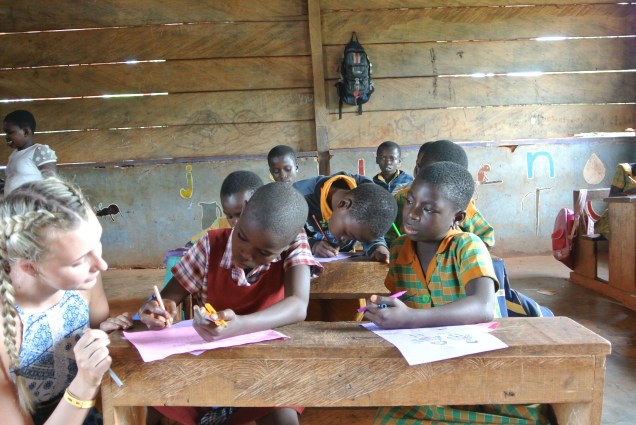
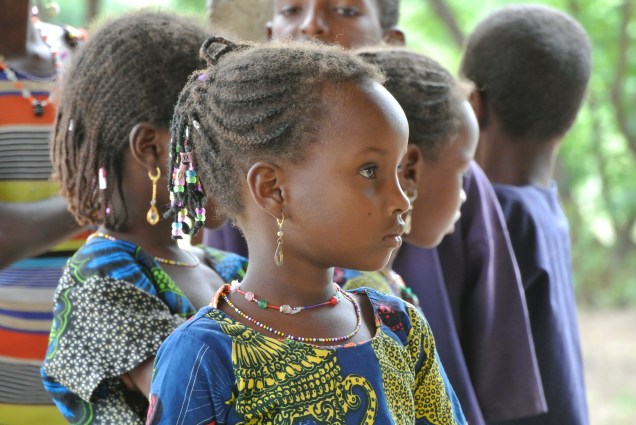
 

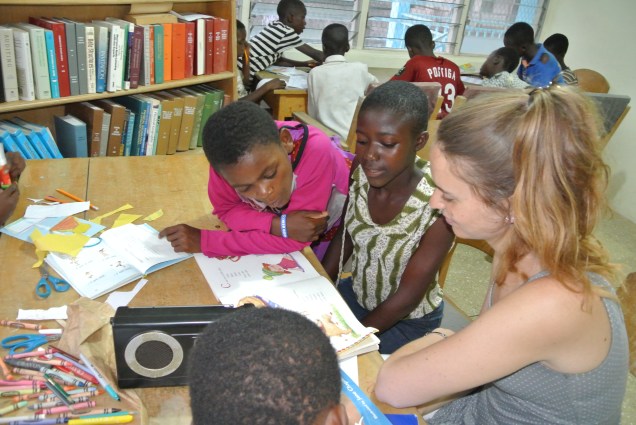
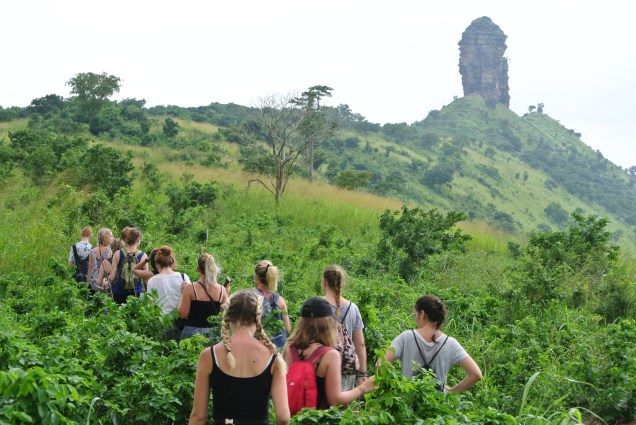
It really was an incredible place. The people were so friendly and welcoming as well as having the best names in the world. I don’t tend to meet people called Blessing, Comfort, Princess or Leticia very often and I certainly don’t meet many children called Alan, Norbert, Theophilius or Richlove! Just the names put a smile on my face! I didn’t once, in four weeks, hear a child cry or a parent shout at a child; it just seemed to be a country where people were content, despite the extreme poverty that we witnessed. The main project that I was working on was building a new school, but we also ran a community library that would only open if volunteers came and opened it. Every day there were around 30 children outside, waiting for us to arrive, desperate to read, practice their English or do some colouring. In this tiny, remote town in the clouds above Ghana, there was such a strong desire to learn.

DSC_1167.JPG

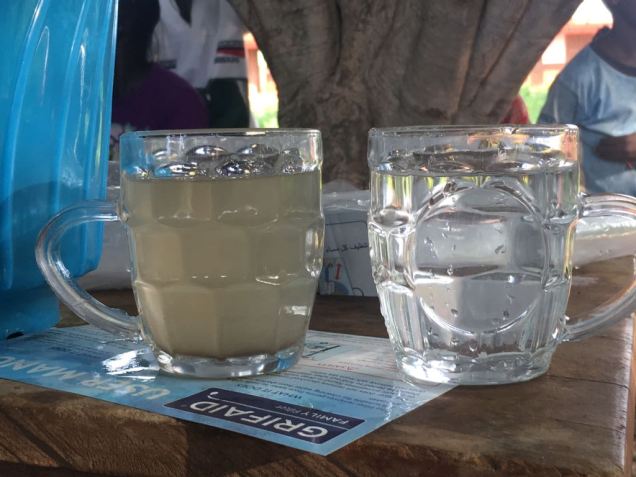
One day each week we would visit a hyper-remote village, the sorts of places that you see on comic-relief with a celebrity shedding a tear. But there were no celebrities here, just mud and straw huts, dirty water and smiling children. We would install and demonstrate water filters, carry out minor first aid and dispense food, clothes and hygiene products – basic human rights types of things!

water.JPG

I was a fair bit older than most of the volunteers (who were largely on gap years or had just finished university) such that I effectively became the house Dad. The vast majority of these people though were remarkable in their commitment and resolve. Yes, one or two were clearly on a holiday or just wanting to have something interesting to say on their personal statement, but most were far more interesting and mature than I was at their age – and despite the Dad jokes, I felt welcomed into their community as much as the Ghanaians welcomed me into theirs.

DSC_1258.JPG

Now that I am back home, I am of course considering my future and especially my future employment. My Ghana experience has shown me how much I personally value helping others. I think I have always been quite a nice person, willing to help others, but I now feel that I want go out of my way to try and make other people’s lives a bit easier if I can and from a career perspective, I am certainly looking at organisations whose missions are to help others. As I left employment I told my former colleagues that I was going to go somewhere and do something incredible, even creating the Instagram hashtag #smugken to let me boast about it. There was a certain amount of hope in that desire to do something incredible, but my experience in Ghana has certainly affected me in a very positive way, enriching my life and giving me a strong sense of wellbeing. It might not last, but I hope it does, because I really do think I prefer the version of me that has come back from Ghana.

Kenny Webster

Drugs and pain

Help

Drugs remain the predominant approach for chronic pain….

…which is one main reason why the problem of pain is escalating. We can never truly overcome chronic pain by thinking that drugs are going to do it for us. We have been brought up in a society in which medication is embedded in our thinking ~ we expect it, healthcare delivers it.

However the reality is very different, which is why the continued use of the biomedical model for chronic pain consistently lets people down. This is now an old fashioned approach that does not work.


Recent headlines

‘Unnecessary’ painkillers could leave thousands addicted, doctors warn’ in The Guardian, May 2017 ~ read here

‘Accidental addiction to painkillers ‘a public health crisis’, says charity’ on Sky News today ~ read here

Mr Shapiro said: “If you look back to say 2009 when the all-party parliamentary group on drugs produced a report on this very issue, including not just painkillers but tranquilisers and anti-depressants and the Government then took a very complacent view of the whole situation… that attitude hasn’t really changed.”

WHY? 

Why is there such little interest from the government, from policy makers, from research funders etc etc? I am sure that when some of these people experience their own chronic pain, they will regret that lack of interest. In the meantime we need social progress for this enormous social problem ~ understand pain a purpose-led enterprise driving social change


You may think that my opening statements suggest that I am anti-drugs. No, I am not. There is a place for medication in the treatment of pain but there must be parameters. For example:

  • What is the best drug for this person and how their pain problem emerges
    • e.g. based on latest evidence ~ ‘Existing evidence on the use of gabapentinoids in CLBP is limited and demonstrates significant risk of adverse effects without any demonstrated benefit’ August 2017 ~ read here
  • Does the person understand the drug: why am I using this one? What does it do?
  • How long will the person be on the drug?
  • When will it be reviewed?
  • How will the use of this drug fit into an overall treatment programme?

The fact that the old model continues to be used means that other serious problems have emerged, adding further suffering and cost: addiction. To use the Buddhist definition of the word ignorance is relevant. To be ignorant is to fail to see the reality. That is most definitely what has happened and this must change now.

Drugs do not teach us how to overcome pain. They merely mask the underlying issues for a short time before they bubble up again. Whilst this can be convenient and briefly satisfy the search for a ‘quick fix’, each time the pain re-emerges and each time the next dose is taken there is a learning.

We learn to gain a dependence on the relationship between taking something and the pleasure of relief ~ this is not addiction, which is another result from over-using drugs or an inappropriate use of medication. The short-termism is perhaps the way we are designed to work, seeking pleasure and avoiding pain as quickly as possibly. This us understandable, yet it still remains the wrong route to truly overcome pain.

Overcoming pain

So if drugs don’t do it, what does? There are simple steps yet it is challenging and hard work. However, hard work and focus are fundamental when we are seeking results and achievement.

“Success comes from knowing that you did your best to become the best that you are capable of becoming” ~ John Wooden

Firstly we must get our thinking straight. Understand pain: like any problem we must understand it to seek the solution.

Then we must take action, repeatedly, in the desired direction. Actions include our thoughts and how they make us feel and direct what we actually do. We must not make the error of thinking that the mind and our thoughts are somehow separate from the physical-ness of ourself. They are not. Our mind is embodied ~ where else can you experience your thinking but in your perceptions and actions? And where do you experience this from? Your body. Each moment is made of thoughts, perceptions and actions that define how we ‘live’ that moment.

Whilst this can sound a bit wordy and a bit philosophical, it creates a practical way onwards with a range of practices and skills that we can develop. What we practice we get better at and what we focus upon we get more of. What do you want?

“What do you want?”

Re-read the question if you need to. What do you want? What does that look like? How can you orientate yourself towards this vision in your thinking and actions each day, each moment? The answer to the first question is not, I do not want this pain. That is what you don’t want, this pain. It draws your attention, focus and resources to pain, pain, pain. Again, think about what you want. Let the image arise in your mind’s eye. Then make it brighter, more colourful and bigger. How do you feel?

To overcome pain we must learn to coach ourselves. We ask ourselves the right questions to start the day off well, committing to be the ‘best me’. Then we practice the skills we have learned that are all in line with your vision ~ movements, exercises, sensorimotor training, mindfulness, communication (with self and others), attention, gratitude, resilience, re-engaging with desired activities, people and situations to name but a few.

The content of each programme is sculpted according to the individual, who always does his or her best, learning all the way. Learning about the causes of on-going pain and how to transform their state over and over so that there is sustained change as the person reaches their potential. This is the essence of Pain Coach ~ the person getting results.

We are seeking social progress. The vehicle to drive this progress is UP or understand pain. UP is a purpose-led enterprise delivering the pinnacle of our knowledge of pain to those in need via workshops (recent CRPS Workshop success) and other means: including the pain sufferers, their families and friends, the policy makers, patient groups, charities and organisations.

Now is the time. Now we must move onwards and embrace the knowledge that we have gained and the new knowledge that will continue to emerge from research and experience. With this we can carve forward to reduce the enormous suffering and costs for a better society that thrives. Drugs are not the answer. The answers are within us.

“Be the change you want to see in the world” ~ Mahatma Gandhi

I would add, be the change you want to see in you. Because you can.

Please contact us if you would like to link, partner and arrange a workshop:

← Back

Thank you for your response. ✨

Ellen’s Running Blog ~ a great story!

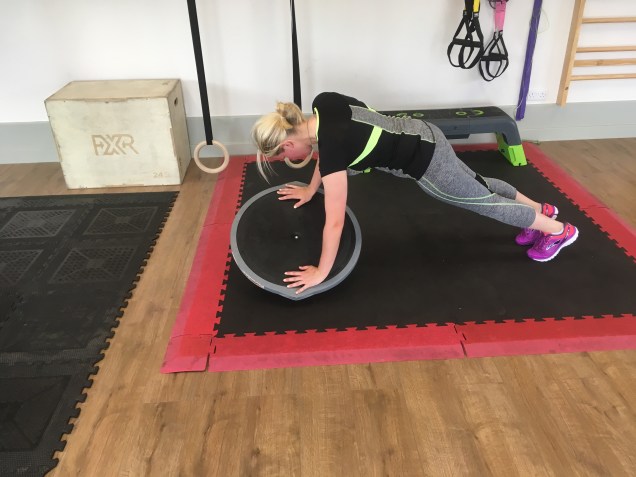
IMG_1540.JPG
Ellen training for Royal Parks 1/2 Marathon 2017

This year the UP running team has Ellen taking part in the Royal Parks 1/2 Marathon raising awareness and money for Understand Pain and CRPS UK. Ellen has CRPS yet has made remarkable progress in her life. I was thrilled when she agreed to take part and join the #UPandrun team!

Here is Ellen’s first blog about training.

Running Blog Take 1

Bio About Myself

Hello Reader! My name is Ellen Williams and this blog is about showing people my unordinary life. I have never been good at writing about myself so I will just start with some key facts:

Name: Ellen Jade Williams

  • Age: 22
  • Hair Colour: Blonde
  • Eye Colour: Green (with flecks of yellow in the middle)
  • Favourite Food: Strawberries
  • Favourite Animal: HORSES
  • Hobbies: Horse Riding (although having your own horses makes it more of a lifestyle than a hobby)
  • Occupation: Yard Manager (my own yard), Yard hand, Office Workers (for my parents business)
  • 3 Qualities: shy, smiley & sensitive
  • Any unusual points: I have CRPS (Complex Regional Pain Syndrome) in the left side of my lower body.

My CRPS story is long and I do not want to bore you so again I shall give you the key facts. In April 2010 I went to South Africa with my school for a Sports Tour. It was the best holiday of my life but unfortunately I came home injured after some swelling appeared during one of my matches. I was told it was just some soft tissue bruising so I had a few weeks off then I carried on. The pain got worse and by the end of June I’d lost mobility in my left knee.

Finally I went to see a consultant who had me booked in for surgery 3 days later. I had a routine arthroscopy in my left knee, which found a piece of bone stuck in my knee joint which had also damaged some of the cartilage. That was sorted and I began to heal, just a little slower than normal.

By the December, I had deteriorated drastically and was back on crutches unable to do physio. January and February 2011 was full of pain, doctor appointments across the South of England, scans and uncertainty. 3rd March 2011, my consultant told my parents and I that I had this neurological disorder, which was incurable and may stay with me for the rest of my life. Confusion and sadness do not even begin to describe the feeling of that day.

I did physical physio for about two years to try and “flip the switch back”, as people describe it. This got me so far but it began to inhibit me more that it was helping me so I had to stop. After getting through my A levels and receiving more disappointing news from doctors, that there was nothing else they could do, my mum realised that I needed something else, something different! Which is where Richmond steps in. I have been seeing Richmond for over 4 years now and I could never write down in words how much I’ve learnt and improved in that time.

In the last 18 months I have finished university, moved back home and started full time work, which took its toll. After having it confirmed that the CRPS had spread into my left ankle I had back injections in January of this year. These once again, completely changed my life and as cliché as it sounds I feel like I have been given a second chance and I am determined not to waste this time as we are not sure how long it will last.

So when Richmond asked me if I would run the Royal Parks Half Marathon, I thought why not. It may not be easy but one quality I possess is determination. Determination to prove others wrong but also to prove to myself that I am “normal” but in my own way! Both my Dad and I are running jointly for UP and CRPS UK, which are two very important organisations for me so I hope this will show people that everyone has demons but how good your life is depends on how you decide to live your life. Please donate and spread the word of CRPS!

30th July 2017

After having some time off due to weather, birthday celebrations and pain I suddenly felt in the mood for a run, even after 6 hours of poo picking fields and mucking out stables! Although I was in the mood for a run, that does not mean I was not also nervous. I hadn’t been out for about a month and suffering such a big flare up the weekend before was always going to add more nerves.

A lot of my other runs I have put a point where I would turn around however today I didn’t. The issue with my disorder is that, people think I’m joking when I say “It has a mind of its own” but I’m really not! My CRPS and I may share a brain but we definitely do not think the same so I know I may think “I’ll aim for this point but will try to push further” but my CRPS will think “Right you said your going to that point, so I will give you pain if you go past it”. This is why today I decided to just run, whether I made it 1 mile or 10 miles it didn’t matter as long as I enjoyed the run.

After the first 10 minutes of agony (which always happens, like the CRPS is trying its hardest to stop me) I settled into my normal running beat and through the deep breathing, even managed to put a smile onto my bright red face!

31st July 2017

I felt so good about my run yesterday until I got out of bed this morning and realised that my hamstrings were as tight as a brand new elastic band! What made the pain worse was knowing that I was going to see the personal trainer tonight and that when I told him, he would make me stretch them out properly, which is more painful than just walking! This is the fourth time I’ve seen the personal trainer but it is already starting to make me enjoy being in a gym again.

After my diagnosis, I was told my best chance of “defeating” the CRPS was to do physical physio to break the on going loop that was theoretically happening in my head. I will always be grateful for my 18 months of physical physio because without

it I doubt I would be able to walk without pain, most days, right now however I should never have been told this method would “defeat” the CRPS. Living with CRPS is complicated and confusing as one minute you will look completely healthy but the next you can be on the floor unable to move but that does not mean it cannot be managed.

Although I am good at managing my CRPS now, self-consciousness about it is still something I struggle with. Even though it is a invisible disorder, I face a daily struggle of thinking everyone is staring at me because of it. This was made worse during my physical physio sessions when I really did have people staring at me because I was crying in pain. The more it happened the more uncomfortable I became in the gym, to the point where I didn’t step foot into a gym between stopping my physical physio and starting with the personal trainer, which is roughly about 4 years.

I was frightened about going back into the gym bit there are many differences between the two experiences. Firstly, in the new gym it is just the personal trainer and myself, which means I don’t need to worry about anyone “staring” because there is no one to stare. Secondly, now I am not trying to break a loop, I am trying to better myself as well as I can so if I do struggle with something, I can stop and try again at a later date and it doesn’t matter. Lastly, compared with 4 years ago I am able to deal and understand my pain a lot better, which means overall I can enjoy the experience more as the pain is not as bad.

Four years ago I never thought I would walk out of a gym, feeling good about myself again, but I do now and it gets better each time even if the hamstring pain gets worse!

1st August 2017

Well they say that things come in threes! Today it was the day for physio and I honestly do not know how I walked today because between the run and gym the last two days my leg muscles are screaming everytime I walk. My physio sessions are my time to show off any improvement I’ve made within a few weeks, no matter how small or silly it might seem to others (yes, I did actually jump up and down for joy the day I told my physio I could walk down the stairs normally again!) I’ve been seeing Richmond for 4 years now, but I continue to go because each time I do go I learn more about my disorder and how to manage it. The sessions also give me confidence to try things that I find difficult or painful again for example an exercise I had to stop doing last night at gym because my knee did not like the movement.

When I was doing the kettle bell swings last night, my knee felt like it was grinding together. So when the personal trainer commented on how well the knee was dealing with the movement I quickly replied “No it isn’t!” It frustrates me when I come across something that is difficult because I know there is nothing wrong with my knee but the pain is still real. I talk it through with Richmond and we come up with a few methods to help lessen the threat of the exercise, which means hopefully I should be able to carry out a kettle bell swing in a few weeks!

5th August 2017

So today rather than being physical myself, my family and I travelled up to London to watch the World Athletics Championships. It was amazing being back there again after the hype of 2012! We were lucky enough to see both Katarina Johnson-Thompson (my favourite athlete!!) and also Mr Usain Bolt himself! We had different seats for the morning and evening sessions however that did not seem to matter because where ever we were Katarina was near us, which made me extremely happy!

Watching her high jump was hard as her clear upset at coming out of her main event so early was obvious but that did not stop her. Watching her then win her 200m race was incredible and relatable. Anyone with chronic pain will know what it is like to face defeat in things that we were once good at but just because you’ve been defeated that day does not mean you’ll face that same defeat again the next day. Dealing with chronic pain daily could make it so easy to give up but if you do not pick yourself up and try again you will never know if you can do it again. You may be defeated once or 10 times but to show the strength to carry on that will show everyone that you will never be completely defeated by chronic pain.

I had to do this myself today when my pain dramatically increased while sitting in the seats. Big events like that is something I often struggle with now due to the small amount of room around the seats and the uncomfortableness of the seats but what also did not help today was the sun shining that was beaming down on my knee making it warm up and become sensitive.

I am used to the staring, slow walking and general irritance of my condition however I still worry about it affecting my family. I know my family love me no matter what but I am sure they still have the thoughts of “Oh for goodness sake, not again” when they have to deal with me like that. My mum having to help me to the bathroom. My brother having to let me grip onto his shoulders so that I can get up the stairs. My dad having to act as my crutch on the way to the car.

People often say to me “how can you keep going through the pain” but I think that is obvious isn’t it? If my family can deal with me like that, surely the least the deserve is for me to try. I have previously said before that the one piece of advice I would give to a new CRPS sufferer is that even if you feel you cannot try for yourself, try for your family because they will find it as hard as you are, if not harder! This advice is still valid to this day and is what I will live by for the rest of my life.

7th August 2017

So after the pain of Saturday and working on my feet all day yesterday, it was no surprise that I was still suffering with some pain throughout today. It was mainly within the top of my back and in my ankle, which makes walking and just general

movement of my upper body difficult. Luckily I work in an office on a Monday, so my work was not affected but I wanted to go for a run.

I went back and forth as to whether I should go or not because of the pain as the last thing I wanted was to make the pain last another day bur I got home with the thought of all I can do is try, whether I do 30 seconds or 30 minutes that was going to be my best because I was still trying! Well I went out and carried on running until I felt I couldn’t run any further.

I ran 1.1 miles, which when thinking about my half marathon in 2 months, isn’t much but it showed me I could run through the pain as due to being distracted, the pain after the run was not as bad as before my run! Although a small run, for me tonight was a big achievement which makes me more determined and excited for October!

10th August 2017

So Thursday’s are my day for my weekly personal training session. I was slightly nervous it may not go too well as ironically my personally trainer had a knee surgery on his left knee last week, which meant he was bandaged up and limping. Your probably thinking “Well why would that bother you?” but a complication of my disorder is that it has an over protection trait towards the left hand side of my body. This means if my brain perceives a left knee to be indanger, it will give me pain in my left knee because it wants me to stop what I am doing because I am “in danger”. The left knee that is in danger does not have to be my own, which means if I see someone with injuries to their left leg, my brain will take that as a danger and so I receive pain myself!

So when i saw the huge bandage on my personal trainers left leg, I spent the first 10 minutes avoiding any eye contact with anywhere to do with his leg. However I was slightly surprised when I did not feel anything at all when I walked in and originally saw his leg. This is a first for me, so I carried on!

The session was hard, but in a good way! It was mainly about building up the core muscles and my cardio fitness. He worked me hard but I kept up with everything I told him to do, which impressed us both! I am so glad I have started going back to the gym because it makes me feel so good when I can see the results each week!

Workshop for CRPS a great success

Understand Pain & Pain Coach Workshop ~ Bath, 2017

“Thank you very much for today. It was a real privilege to attend”

I was delighted that we filled all the places and had to add several more for the CRPS workshop on Monday. It was an excellent afternoon with a really engaged group, keen to understand and know what they can do to move onward. That is the premise for Understand Pain and Pain Coach Workshops, where we deepen our knowledge of pain so that we can focus on what we CAN to be successful and get results.

This was the first UP & CRPS UK workshop at Royds Withy King in Bath, and based on the demand and feedback, we will be rolling out future dates across the UK. We will also be extending the workshops to a day so that we can have even more experiences of success together. The day is all about taking action and having the experience of what that is like, driving and motivating change in your desired direction.

The popular practices we looked at included the mindful practices that can be used in different ways to create calm, insight and focus, the ‘check in’, and journalising. We followed the way that I do in sessions with people 1:1, starting with the vision, strengths and values. This attunes the person to where they are going and the characteristics they possess to use to get there.  Over the afternoon we covered the key areas:

  • Understand Pain
    • What is pain?
    • The size of the problem of pain
    • CRPS criteria
  • Pain Coach
    • The practices that constitute a lived programme that interweaves into the person’s life, whilst they live their life as a means to overcoming pain — becoming a self coach and a self leader

The three main features of the workshops are simple and digestible:

  1. The model of success ~ how we can be successful
  2. Strengths based coaching ~ how to get the best of you
  3. The pinnacle of our knowledge of pain ~ understand pain to change pain

There is no reason why we can’t address pain, learn, transform, and have fun at the same time!

Here are some more comments:

What did people most enjoy?

  • “being in a space to acknowledge pain, guilt free”
  • “Richmond especially, extremely brilliant way with him”
  • “lovely delivery style”
  • “the way the workshop was presented”
  • “very enjoyable”
  • “good explanations. Simple to understand”
  • “very informative”
  • “I did not expect to be challenged as much as I am now following the workshop — positively”
  • “interactive nature of the event”

Come and join us next time!

Future events driving social change

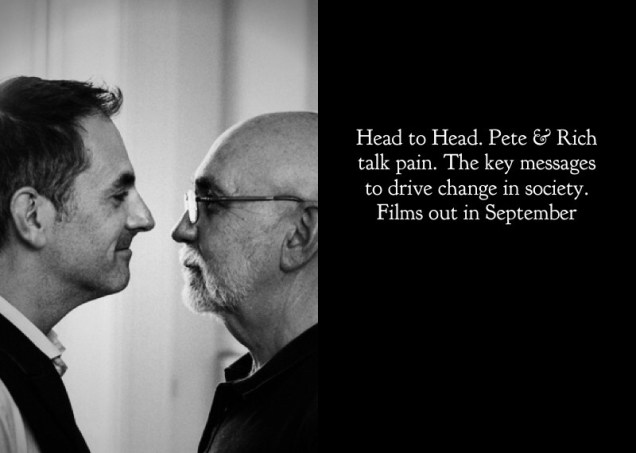
For release in September ~ In conversation: Rich and Pete talk pain. A series of short videos focusing on the key areas of pain. See Pain Coach and Physiotherapist Richmond Stace + Pain Toolkit’s Pete Moore in relaxed conversation. My aim is to create a community so that we can drive social change via new thinking based on new understanding of pain and the action we must take as a society. This is just the beginning. Join us!

FullSizeRender.jpg

Understand Pain & Pain Coach Talk ~ Weds 4th October 2017 at The Royal Society of Medicine ~ click here to book

Understand Pain & Pain Coach Workshop for Clinicians and Therapists ~ Thursday 5th October 2017 in New Malden, Surrey ~ click here to book

UP & Pain Coach Workshop in the community

Understand pain tackling the global chronic pain crisis

Delivering knowledge, skills and know how to people in need

On Monday 31st July I will be working with CRPS UK to deliver a workshop for people suffering complex regional pain syndrome (CRPS). This is the fundamental work of UP, to provide not only education but how to use the new knowledge effectively to get results.

CRPS UK charity for complex regional pain syndrome

Our focus is on change and moving onward by engaging in positive work. This is our work at UP as we seek to inspire, empower and enable individuals and society at large to live well and with meaning.

Human beings are incredible. We have such great potential. Our ability to learn, adapt, and transform ourselves means that we can decide to commit to the skills of well-being and reap the rewards. We are designed to change. We just need to decide upon the direction. What is your picture of success? What do you want your life to be like? These are the questions we pose in using a strengths based coaching approach to overcoming pain.

Pain Coach and Understand Pain Workshop

The workshop this month in Bath will be proactive, interactive and full of practices for the participants to take away and use with immediate effect.

To attend the FREE workshop, click here

What is Understand Pain all about?

The purpose of UP is to provide knowledge, skills and know-how to people who need to understand pain. With pain being the number one global health burden, this is a huge number of individuals in many different circumstances. We are not limiting ourselves at UP as we seek to grow quickly in order to reach across society and the globe to tackle this crisis. Our vision is a world where pain is understood and hence addressed effectively by individuals, society and healthcare.

We believe in the potential of this vast group of people across the world. They represent an incredible resource if only pain were understood, allowing for meaningful, fulfilling and useful living. Imagine the resources that would be available! The picture we see is society moving onwards, evolving and growing with a great sense of community.

UP delivers a range of workshops. To:

  • People suffering chronic and complex pain and their carers
  • Clinicians, therapists and allied heath professionals
  • Others who must understand pain as part of their professional role; e.g. medico-legal lawyers, policy makers, commissioners.
How does it work?

UP has different channels of provision. For each paid workshop we provide a workshop to a community or patient group. This means that those who are paying for their place or companies/organisations purchasing a workshop, are not only growing themselves but also society. This together with free places for the next generation of clinicians and therapists at each Pain Coach Workshop means we are building the knowledge and skills base together as a community.

Keep up to date by signing up to the Pain Physio Blog, the UP blog or sending me your email address to join the newsletter. The purpose of the blogs and newsletters is to advance our thinking as a society. As you will see if you sign up, overcoming pain is not by only focusing on treatment for pain, but by developing the skills of living and wellbeing. And the exciting thing about that, is that this is all about living well and performing our best. Do you want to be the best you? I know the answer to that! So join us and let’s understand pain and live life.

RS