Pain Coach Workshops ~ supporting the next generation of therapists and clinicians

A week ago we had another Pain Coach Workshop. This time in Wilmslow, near Manchester. A great spot with some excellent local cafes. I do love a cafe.

Regular readers will be familiar with the UP story, the UP vision and how we are supporting the next generation of clinicians and therapists by providing two sponsored places for local undergraduates.

Everyone who attends the Pain Coach Workshop brings immense value to the day. Purposely a small group to create a positive dynamic, the team all add their experience and views. In particular I enjoy hearing from the current undergraduates–the openness, freshness and the beginner’s mind that I encourage is evident.

Sam and Emma from Salford University came to the Wilmslow workshop, and here is what Sam had to say:

Here’s what Sam had to say:

I have recently completed the Understanding Pain & Pain Coach Workshop lead by Richmond Stace. I am a physiotherapy student, and was lucky enough to receive a free place that Richmond provides to support local undergraduate development.
I became interested in this workshop due to my time out on placement, in which I was challenged with chronic pain patients. Many patients had been seen by numerous health professions prior to myself, and suffering with pain for many years. I did not feel equipped to deal with this patient group who had deeply established pain belief systems and pain embedded within their lives. I believe as a student, it is important to develop the ability and confidence in which you can challenge a patient’s understanding of pain.

I understood the approach of ‘Making Every Contact Count’ was vital to encourage physical activity and promote behaviour changes that lead to a healthier lifestyle. However, I now feel that the approach of ‘Making Every Contact Count’ needs to extend to pain coaching. The course has provided me with the tools to encourage patients to understand pain and most importantly, gain control over it. This is a skill that will need to be practiced, and as a student it is the perfect time to develop and create change in ourselves, in-order to create change for our patients.

I thoroughly enjoyed this workshop, it was great to share the day with experienced physiotherapists and it was a fun learning experience. Richmond’s passion, values and drive is infectious and I cannot wait to graduate to develop my abilities to encourage, educate and enable change. A big thank you to Richmond for this great learning opportunity and I would encourage all physiotherapy students to attend!

The next Pain Coach Workshop is in Newport on Sat November ~ see here

Much more to come in the 2018!

Workshop for CRPS a great success

Understand Pain & Pain Coach Workshop ~ Bath, 2017

“Thank you very much for today. It was a real privilege to attend”

I was delighted that we filled all the places and had to add several more for the CRPS workshop on Monday. It was an excellent afternoon with a really engaged group, keen to understand and know what they can do to move onward. That is the premise for Understand Pain and Pain Coach Workshops, where we deepen our knowledge of pain so that we can focus on what we CAN to be successful and get results.

This was the first UP & CRPS UK workshop at Royds Withy King in Bath, and based on the demand and feedback, we will be rolling out future dates across the UK. We will also be extending the workshops to a day so that we can have even more experiences of success together. The day is all about taking action and having the experience of what that is like, driving and motivating change in your desired direction.

The popular practices we looked at included the mindful practices that can be used in different ways to create calm, insight and focus, the ‘check in’, and journalising. We followed the way that I do in sessions with people 1:1, starting with the vision, strengths and values. This attunes the person to where they are going and the characteristics they possess to use to get there.  Over the afternoon we covered the key areas:

  • Understand Pain
    • What is pain?
    • The size of the problem of pain
    • CRPS criteria
  • Pain Coach
    • The practices that constitute a lived programme that interweaves into the person’s life, whilst they live their life as a means to overcoming pain — becoming a self coach and a self leader

The three main features of the workshops are simple and digestible:

  1. The model of success ~ how we can be successful
  2. Strengths based coaching ~ how to get the best of you
  3. The pinnacle of our knowledge of pain ~ understand pain to change pain

There is no reason why we can’t address pain, learn, transform, and have fun at the same time!

Here are some more comments:

What did people most enjoy?

  • “being in a space to acknowledge pain, guilt free”
  • “Richmond especially, extremely brilliant way with him”
  • “lovely delivery style”
  • “the way the workshop was presented”
  • “very enjoyable”
  • “good explanations. Simple to understand”
  • “very informative”
  • “I did not expect to be challenged as much as I am now following the workshop — positively”
  • “interactive nature of the event”

Come and join us next time!

Future events driving social change

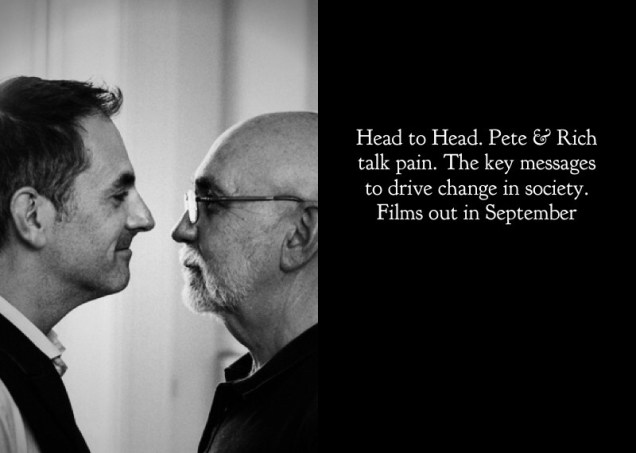
For release in September ~ In conversation: Rich and Pete talk pain. A series of short videos focusing on the key areas of pain. See Pain Coach and Physiotherapist Richmond Stace + Pain Toolkit’s Pete Moore in relaxed conversation. My aim is to create a community so that we can drive social change via new thinking based on new understanding of pain and the action we must take as a society. This is just the beginning. Join us!

FullSizeRender.jpg

Understand Pain & Pain Coach Talk ~ Weds 4th October 2017 at The Royal Society of Medicine ~ click here to book

Understand Pain & Pain Coach Workshop for Clinicians and Therapists ~ Thursday 5th October 2017 in New Malden, Surrey ~ click here to book

Probably the best meeting in the World

More reflections on SIP 2017

IMG_4732

You know what it’s like. You realise at the time that you are involved with something important. Then you get home and start thinking ‘wow’, that really was probably the best and most important meeting in the World when it comes to the problem of pain: SIP 2017.

The problem of pain is undoubtedly one of the greatest challenges facing society, and most people don’t even realise. Up to 441 billion Euros is the cost of chronic pain each year. That is an enormous financial burden that does nothing to describe the suffering endured. This can and must change. Attitudes and beliefs in society need a drastic update in line with what we really know about our potential as human beings for fostering change. Out with the old messages, out with interventions and medicines as the way to solely ‘manage’ pain, out with the notion that pain equates to tissue damage. Out, out, out!

“out with the old messages and in with the real understanding of pain. Then society knows that this suffering can ease

It was fascinating and enlightening to hear so many European clinicians and stakeholders talking about people (patients), the importance of healthcare professional education, and even the word coaching was used. In the room were people looking at pain from all angles, a unique blend in the first place. This set the scene for deep discussion, learning and results.

The openness to ideas and modern thinking about pain was refreshing. The people at SIP 2017 want to understand, want to learn and above all want to make a difference. And we can make a difference by persevering and looking at every possible way to change the way society thinks about pain ~ understand pain to change pain.

No single group dominated the meeting. Instead the forum was truly free for each person to contribute and put forward their thinking and experiences. We heard people talk about their pain, and they were able to discuss this with scientists, clinicians and policy makers in an environment created purposefully. It seems that clinicians ‘worry’ about conferences or meeting where people with pain and suffering can speak about their lives. Instead, this should be encouraged and embraced as we get to the bottom of the problem and take real steps forward. How useful is a conference where academics or clinicians speak about cases and research without ant real stories in the room?

“the openness to ideas and modern thinking about pain was refreshing

My intention is to build and cement relationships with other stakeholders across Europe, be involved with the new EU platform, contribute with UP and Pain Coach workshops and take action in line with the vision of UP: a society that understands pain.

SIP statement

‘The European Commission is following SIP’s lead and has launched the EU Health Policy Platform to build a bridge between health systems and policy makers. Among other health policy areas, the societal impact of pain is included as well and will have a dedicated expert group.’

In the UK we must take this example of how we can move forward. Pain is a societal issue and hence we need to hear from all stakeholders, in particular patient representative groups. The lived experience of the person is the basis of what we are working with to overcome pain. We are seeking to change the story so that the person can say: I feel like myself. Change is what people want, defined in their own terms by things that they want to do in their life. We can and must work on a number of levels to achieve this and we can and must be optimistic. Why? Because we are changing every moment, we are designed to change and need to know how.

Our quality of life is determined by how we feel. How we feel is determined by what we are thinking (consciously and subconsciously). What we are thinking is based on our beliefs about the world, and these stem from all the influences in our life. The moment to moment decisions and actions we take through the day shape our life and the ‘rating’ we give to our life. However, there is constant change afoot and we can harness the opportunity this creates by making decisions to commit to a particular pathway. The pathway is determined by the practices chosen in line with a desired outcome. Being determined to be the best you, with a clear vision and being coached to achieve success and long-term results transforms the experience. This is the essence of Pain Coaching.

With 100 million people suffering pain in Europe, 100 million Americans suffering and the rest of the World following the same theme, we must create the conditions for change. This starts with the understanding of pain because when people truly understand their pain, they realise their potential and a way forward. There can be a role for medication and interventions on occasion, but with this being a societal problem, there are many other actions that empower and enable people to overcome their pain. Together we can do this as a modern society. We have the means and with the costs so high, we have the impetus.

RS

Pain Coach Workshop for GPs

Why should GPs understand pain?

Audience Applaud Clapping Happines Appreciation Training Concept

Sat 3rd June Education Morning at New Malden Diagnostics Centre

~ Do you understand pain?

Can you confidently answer these questions:

  • what is pain?
  • what do we currently know about the causes of pain?
  • what can the person in pain do to overcome their pain?

Pain is one of the commonest reasons to seek help. And we are not only talking about back pain or neck pain, instead thinking about all the circumstances and conditions that feature pain. Digging deeper, whilst the pain is unpleasant by its very nature, it is the suffering that drives the act of going to the doctor. We can even take this a stage further and suggest that the causes of suffering result in consulting with the GP. For example, the person who cannot work, cannot play with their children, cannot play sports etc. It appears as if life’s choices have disappeared. By definition, suffering refers to the loss of sense of self, and indeed the person with persistent or chronic pain can feel such loss.

The existing understanding of pain has taken us a long way away from the biomedical model. The biopsychosocial model has gained some traction but the predominant approach continues to be driven by the search for an injury, a pathology or a structural explanation. For many years it has been known that pain and injury are not synonymous ~ the famous paper by Pat Wall was published in 1979:

“The period after injury is divided into the immediate, acute and chronic stages. In each stage it is shown that pain has only a weak connection to injury but a strong connection to the body state.

Pain features when we are in a state of protect in the face of a perceived threat. The intensity of the pain relates to this state and not to the extent of tissue damage. Pain and injury are fundamentally different and hence any explanation or treatment for pain based upon the thinking that a ‘structure’ or biomechanics is to blame is at odds with our understanding of pain. In fact, it is this misunderstanding that contributes significantly to chronic pain being the number one global health burden. This can and must change, which is the raison d’être for UP | understand pain.

~ understand pain to change pain

This being the case, this workshop will be a brief look at this enormous societal issue, a public health concern of vast importance considering the massive costs and immeasurable suffering. Not only will we review current thinking and understanding, we will consider the role of the GP and practices that can be readily used.

  • understand pain yourself
  • know your role
  • how can you help the person understand their pain?
  • setting the person on the right course: what is their vision of success?
  • practices you can choose to use in clinic

This overview is based on the Pain Coach Programme. The programme delivers results for people who make the decision to commit to practices that bring about change in a desired direction. They understand that we are designed to change and that we have great potential to be harnessed and used to overcome pain and live a meaningful life.

1:1 Pain Coach Mentoring: for clinicians who choose to pursue understanding pain to a greater level together with the practice of Pain Coaching.

RS

What training do I do?

My own practices each day

IMG_4275

During our conversations in the clinic, people often ask what I practice to keep well. The simple answer to the question is that I have grooved several key practices that enable me to think clearly, and see things for what they really are. Now, to qualify this, yes I have been practicing for a long time, and no I am not perfect at them! They are always work in progress as we learn more and more about ourselves, the world and how the two come together.

So, the main practices are mindfulness and exercise. Sounds simple! It does actually get easier and easier to live them as they become second nature and part of who are are. More importantly they are part of your ‘why’, or your purpose in life. Starting with a vision of success, you can then choose to orientate you thinking and actions toward this picture. To achieve something takes practice and focus and learning. Mindfulness and exercise are both important for this as ways to improve performance, but of course they themselves are to be practiced.

The idea of the Pain Coach came to me having thought about the best way we can address the huge problem of chronic pain. I wanted a way to authentically reach the person and encourage them to take the steps to success, feeling inspired by what they are doing and achieving. In essence, the person is coached to become their own coach, simply because we are with ourselves all the time and need to make decisions and take action. To overcome pain, which we can, this needs to be consistently in-line with the health ‘me’. But, we are all coaching ourselves. That inner dialogue we all generate and experience can be so influential in our perceptions, actions and thinking.

~ how am I choosing to feel?

One of the areas I have worked upon in my practices is the inner dialogue. The realisation that the inner dialogue is saying ‘……….’ and that I do not have to listen and instead choose another route, is empowering. Of course that does not mean that the ‘negative’ voice is not heard. It means we can choose to think in a different way, feel a different way by actively carving a new thought pattern or action. How am I choosing to think? How am I choosing to feel? Two great questions to ponder as they create space to make a decision in line with the best you captured by the vision.

Mindful practice

Mindful practice takes a number of forms. I find the practices described by Thich Nhat Hanh and Pema Chödrön to be highly relevant and effective for the modern world in which we live ~ here’s an example.

The formal practice of sitting and being mindful or mindfulness meditation develops our skills in paying attention, knowing our mind’s habits, experiencing a healthy flexibility with our emotions and often a calmness that is welcomed. However, in practicing, we are not trying to get anywhere or actively creating a certain state. Instead, we are open to whatever arises each moment, whether pleasant or unpleasant, seeing things for what they are.

~ paying attention and being present gives us great insight

Day to day practice, or through the day practice, string together awareness of what is happening in this moment. Our mind’s natural state is to jump around, into the past or future, which if unskilled means that we embody this flitting to the point of discomfort and suffering. There is a difference between being aware that you are holding a memory about a particular event and re-living it. Both will be emotional, but one causing much more suffering than the other. In being mindful, one learns to let go instead of gripping on and replaying the tape, building the emotion with the knock on effects for the day.

A simple way of achieving this is by consciously taking 3 breaths and slowly breathing out. Setting a reminder of having a prompt can be helpful until it becomes second nature.

Learning to ease your own suffering

To learn to ease your own suffering allows one to present the ways to others, so that they might ease theirs. Undoubtedly, everyone experiences suffering through their lives as it is unavoidable. This suffering, when transformed, becomes one of the most valuable learning experiences that can be used to benefit others and society. The great people people we listen to about the ways we can ease suffering have suffered enormously and this is no coincidence.

The most potent example of suffering is the loss of someone you love. And whilst the pain may never go, the suffering can and does ease. Indeed, when the experience is then looked at, if some good were to emerge it would be a deeper compassion for others’ suffering and an ability to help and support others to move onward in a chosen direction.

On a more day to day basis, suffering comes on the form of anxieties, fears and wanting to be someone or somewhere else. Resisting what is happening and how you are right now causes great tension and discomfort. People can behave in unpleasant ways when they feel they are not getting what they ‘deserve’.

Mindful practice, which is simply being open to all experiences, seeing how they naturally transform and pass, letting go of attachments and being non-judgmental, relieves all of the causes of suffering mentioned above. We can also develop the insight to understand the causes of our suffering: ‘know thyself’. Exploring the question: ‘who am I?’ can be most challenging, but most revealing and the way to perform our best at home, at work or on the field of play

We can all develop our own ways of practicing according to our philosophy of life. Starting by defining that philosophy and writing it down alongside the clear picture of what the desired life looks like, sets the stall. These are some of my tenets:

  • We are designed to change and we can choose the direction we take by choosing an attitude to life
  • We are great learners and opportunities to learn exist all the time
  • We all have incredible potential
  • We can choose to do our best each day
  • We have the basic tools, but it is down to the individual to take responsibility and flourish

What will you choose?

RS

Compassionate abiding

A way to approach unwanted feelings by Pema Chödrön

Man and woman holding hands at a table

Pema Chödrön writes with deep compassion about the challenges we face in the modern world. Pema and Thich Nhat Hanh are two of my favourite reads, as they bring the philosophy of Buddhism to the people in a practical way. The practices do not need to be considered spiritual, instead ways to gain insight, patience and build compassion toward ourselves and the world. They offer a great deal more than that too!

My Pain Coach Programme is a range of simple and practical skills that you use to overcome your pain and live your life meaningfully. These skills are based on understanding your pain, the key foundation from where new healthy habits emerge. Here is a wonderful practice from Pema, compassionate abiding, which is a way to bring warmness to your feelings of discomfort. We all experience uncomfortable emotions and feelings, yet we are rarely trained how to face them, instead encouraged to avoid them. These feelings are a NORMAL part of life and hence unavoidable. Therefore, having the skill to be open to these feelings is a way to ease suffering.

In relation to pain, we have many associated feelings and emotions that increase suffering. There is the pain itself and then the suffering we live from the way we think about it. When you realise that you have a choice, it is hugely empowering. ‘How am I choosing to think about this pain?’ is the question to pose to self. As you step back from being embroiled, you gain insight and actualise the opportunity to make a choice to think differently and feel better. This is why it is so important to understand pain. To understand pain is to know that you are safe and free to make choices, and to live.

The practice

When you realise that you are hooked, which is that familiar feeling you have when a habit is about to arise, you use this practice. We all have many hooks that lead to the unpleasant or unwanted emotions and feelings, from seeing that the loo seat is up to the way a partner says something, from Monday morning blues to the craving for a cigarette. Other examples include addictions, phobias, fears, prejudice, shame, and rage

The embodied feeling emerges often with a familiar inner dialogue. However, we can choose to write a new script, a positive script. Interestingly, our self-confidence is determined by what we are telling ourselves and listening to (these are different) in this moment ~ watch here. Remember though, it is normal to feel the range of emotions. We need them all, even if we don’t enjoy some of them. No-one ever said life was wholly enjoyable!

In 2 parts

Breathing in

Being in touch with and open to the feeling of being hooked, breathe in deeply, allowing the feeling to really be there. Allow the feeling to exist. We can be tempted or in the habit of pushing away. You will be aware of the urges and discomfort, and that is normal. You can be ok, you can be comfortable with being uncomfortable. You abide with the feeling.

Breathing out

As you breathe out, you ease the tension that is part of and surrounding the discomfort. The out-breathe frees us from this tension as the space in which the embodied feeling exists becomes apparent.

When to practice

There is no limit to how much you can practice. I think a useful start point is to sit somewhere familiar and practice for a few moments and over time gradually increase the length, or blend with other mindful practices. Of course, drip-feeding our selves through the day, so little and often, has a really beneficial effect because we form a healthy habit. We can also practice as we become aware of the feelings of discomfort as they arise, touching the experience with our own natural warmth and compassion. You will notice how your typical reaction softens.

We are not pushing the feeling away. Instead we are fully there and present as the feelings transform, as all feelings, thoughts and emotions do. Nothing is permanent. No matter how ‘bad’ you are feeling right now, it will change because we change, every moment, like the water of a river that continues to pass by. This fact and the science of pain that gives us a new understanding of our potential, gives great hope and reason to be optimistic. Be inspired to live well, because we can.

Refresh and renew

seaRefresh and renew is one of the most important strategies that I teach individuals who have been suffering persistent pain. Within the refresh and renew there are a range of techniques that can be used dependent upon place, time and context, all of which are important ingredients making a whole. We are in no way separate from where we are, what we are thinking, what we are doing and what we are feeling. These are merely the conscious elements and of course there are the vast subconscious elements including our biology in the dark.

Being in pain is exhausting, usually added to by feelings of anxiety and concern. There can often be a cycle of pain and sleep disruption, one begetting the other as time moves on. It seems more and more probable that sleep is fundamental for our health, which is why creating the conditions for a consistent daily rhythm of activity and rest is vital. Most people know what it is like to ‘survive’ after a bad night’s sleep, but imagine the effect when this is on-going.

Refresh and renew is needed throughout the day by everyone. Every 90 minutes we may feel an urge to do something: move, take a few breaths (4-5 is good), have a healthy snack or a glass of water. This is certainly the case when one’s health is below par as we need to create the conditions for our biology in the dark to switch into health mode rather than survive mode. The person suffering persistent pain spends much of their time in survive mode as they are both consciously and subconsciously protecting themselves from perceived threats. Consider the person with back pain who walks into a room to survey for the closet chair, whether it is likely to be comfortable or if they will be able to have a conversation because their pain maybe too distracting. The thought processes, predictions, anticipations and expectations that are embodied, will prime the coming experiences. The good news is that creating new habits can change this routine for the better, beginning with being aware that this is what you are doing.

All the extra monitoring and thinking is tiring as you use your resources, along with imprecise and guarded movements that require more energy than normal. Too much muscle activity for example, has a huge energy consequence, which is why refresh and renew is so important through the day. Setting reminders and alarms can be effective in the beginning, but as the new habits take hold and the internal messages become second nature, you increasingly make the choices that orientate you to getting better; your desired outcome.