5 ways a partner can support and encourage you

Chronic pain can be the source of huge strain upon a relationship. Partners and other people close to the suffering individual can be at a loss as to what they can do to help. Sometimes their assistance is welcomed and other times not. It can be confusing and stressful. There are many ways that a partner can help and some will be individual to those involved. Here are 5 simple ways that a partner can help:

Be an extra pair of ears and eyes

During consultations with specialists or therapists, it can be useful for a partner to come along. Beforehand you can decide upon their role. The possibilities include:

  • listening and note taking
  • offering observations about what has been happening
  • watching and learning exercises so that they can provide feedback at home
  • just being there for moral support

Sometimes having someone else in the room, even a loved one, can be distracting depending upon what is being practiced. So do discuss this with your clinician for the best outcome.

Understand pain

When your partner understands pain they will be able to further empathise and act through compassion rather than fear and worry. We do respond and are influenced by the people we are close to, meaning that if they have a working knowledge of pain they will better provide support and encouragement.

Pain can and does vary as each pain experience is as unique as each unfolding moment. Knowing that pain is related to perception of threat rather than tissue damage or injury, along with some of the main influences (e.g. emotional state, context, tiredness) helps to navigate a way forward. To overcome pain the person learns to coach themselves, making best choices in line with their picture of success. Sometimes we need help or someone to listen to us whilst making these choices.


IMG_4241

A hug

Touch is healthy, especially from a loved one. Someone recently told me about how a hug from her children relieved her pain. Why? The release of oxytocin for a starter. The feelings of compassion and love can cut through all other emotions and feelings, which is why the development of self-compassion is one of the key skills of well-being.

Sometimes a hug can be painful of course, depending on where you feel your pain. If this is the case, then simple touch somewhere else is enough. Seek to notice the good feelings that emerge in you: what do they feel like? Where do you feel them? Concentrate on them. And if you are not with that person, just imagine a hug or a loving touch. This triggers similar activity, just like when you think about that beautiful scene in nature, your body systems respond as if you are there ~ our thinking is embodied.

Practice the skills of well-being together

A good example is metta or loving kindness meditation that cultivates self-compassion. It is best to gain instruction 1:1 to start with and then use a recording as a prompt until you are familiar with the practice. Group practice is also good when the collective or community creates a soothing atmosphere in which to practice.

At home, practice metta with your partner. Doing it together, you form a bond as you spend meaningful time together. You can also practice the exercises together. These are nourishing and healthy movements with the purpose of restoring confidence as well as layering in good experiences of activity to overcome pain.

Spend time together doing something meaningful

We are designed to connect. The chemicals we release and experience as that feel-good factor, do so when we have meaningful interactions. Pain all too often appears to limit choice and our tolerance for activity. However, on thinking about what we CAN do rather than what we cannot, we begin to build and broaden the effects of choosing positive action.

Positive action is all about focusing on what we can do: e.g./ I can go for a coffee with a friend for half an hour to gain the benefits of connecting, moving, a change of scene etc. and I will concentrate on these benefits. Make some plans, working within your current tolerance level, knowing that you are safe to do so, and follow them through by keeping yourself pointed towards the picture of success*. You can then gradually build your tolerance by pushing a little with increasing confidence.

There are many other ways that a partner can be involved. The key is to communicate openly and make plans together ~ here is a great insight into communication by Thich Nhat Hanh.


* Clarifying your picture of success gives you a direction and the opportunity to check in and ask yourself: am I heading in that direction or am I being distracted?

Please note: Whilst the practices above can appear to be straightforward, you should always discuss your approaches with your healthcare professional
Not long now…

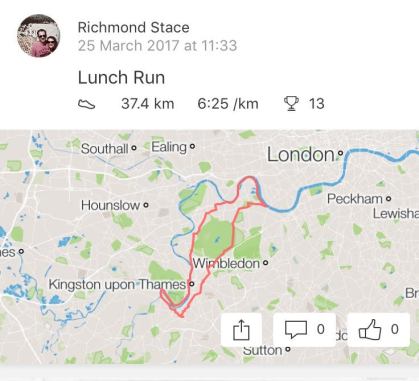
With only a few weeks away before the London Marathon, I must admit that I am getting rather excited. It has been very worthwhile putting in all the miles with the aim of really enjoying the day.


run1


One more long run to do this weekend and then I will be tailing off as advised by my team of trainers and co-runners. Yesterday a friend asked me about these 20+ milers and how you keep going. I never imagined that I would ever be running for 3-4 hours, and certainly never thought I would be popping out for a ‘quick 10 miles’. I have found that the time passes quickly once I get going but really focusing on what is going on around me, looking up, coaching myself to remain relaxed and feel inspired by the encouragement I receive.

Anyhow, the really important bit is raising money and awareness of two key projects tackling the number one global health burden: pain. The charity CRPS UK and the social enterprise UP | understand pain both envision a world of people understanding their own potential to live well and to overcome their pain.

The problem of pain

The costs of chronic pain to individuals and society are vast. Loss of earnings, loss of productivity, the expense of treatments that often don’t work and above all the immense suffering. This need not be the case if society really understood pain. By understanding pain, individuals would know where to put their efforts to get better from the outset of a pain problem, whatever the cause, and healthcare would deliver effective care.

The thinking on pain still largely resides in out-dated models. This means that individuals become reliant upon passive treatments, are subjected to endless unnecessary investigations and are exposed to the wrong messages about pain that keep expectations low and purport fears and worries that only increase suffering.

“Pain is poorly related to injury, tissue health, structures in the body, biomechanics or pathology

Our journey to understand pain began when two remarkable men created pain medicine. Pat Wall and Ron Melzack changed the landscape forever and have inspired a generation of scientists and clinicians to ask questions about pain and discover the answers: what is pain? What is pain for? What can we do about pain?

Our knowledge about pain has increased enormously but there is a long way to go before our current understanding is practiced day to day in society. This gap is a significant societal issue, and one that UP will bridge with the forthcoming education programmes and an online resource that is this very website. The UP site will be re-launched this year, packed with information that people can use to understand pain.

We have amazing potential

Humans are incredible. We are designed to change, adapt and learn, so tapping into our natural resources is one of the most potent and enabling things we can do. Consider all the achievements of mankind, which largely boil down to a clear picture of success, an ability to focus upon a plan of action, taking action and learning along the way when facing challenges. Together with a dose of determination, courage and belief, we can achieve by always being the best that we can be: ‘I will be the best me today’ is not a bad mantra to have!

The challenge of pain is no different. The programmes that UP will run for people in pain and for clinicians are all based on how we can be successful, how we can chose the positive route, how we can achieve our best. This is by focusing on what we do well, how we do it and how we can do more of this whilst acknowledging and seeking to improve in other areas.

So this in my mind drives my desire to do my best in training and on the day on 23rd April. Having said that, I will be pleased to see some familiar faces in the crowd on the way round! Or even faces I don’t know who want to support our causes. Pain affects so many people across the globe for so many reasons. Together we can change this by changing the way society thinks about pain and our expectations. Let’s expect to do well and live well.

Please support us here by donating whatever you can and join us for a quiz night before the run on Thursday 20th April in Surbiton — see here.

Thanks!!

Why am I running the London Marathon?

unnamed
16.3 miles

We are 10 weeks away from the London Marathon and I am getting excited about the day. The training is going well, and I am using others experience and knowledge as a yardstick, reaching 16 miles so far. A bit more nudging in March and I’ll be set to join the thousands of other runners, coursing round the great city of London.

So why am I doing this? The answer is simple. To raise awareness and money to address the biggest global health burden, chronic pain. It costs us the most economically but of course the amount of suffering worldwide is immeasurable. This must change and we can change it by shifting our thinking to be in line with what we know about pain. With an understanding of pain, individuals realise their potential to overcome their pain and live meaningful lives. This is achievable, and in this day and age we have the means to reach across the globe to give people the knowledge and skills. This is the story of UP | understand pain, which was co-founded by myself and Georgie as a pain awareness campaign. Now we have big plans to take the project to another level to achieve our aim of changing the way society thinks about pain.

Complex Regional Pain Syndrome (CRPS) can be a terribly disabling condition, characterised by intense pain. Many people have not heard of CRPS and within healthcare diagnosis is often delayed. This is a problem because like most conditions, early identification allows for treatment to begin. The treatment must be based upon the person’s understanding of the signs and symptoms, for there is an understandable fear that drives on-going protection. Therefore, as with any injury or pain problem, the early messages must be right and make sense.A person’s belief drives their behaviours and subsequent thinking, so a good working knowledge of pain is vital ~ understand pain to change pain.

CRPS UK gained a place in this year’s London Marathon, and having spoken twice at their conferences and being in regular contact, I ‘volunteered’ to be the runner. I was very excited to be chosen and gratefully accepted, which is now why I am out in the Lycra every other day (I will not be posting a picture of that!). CRPS UK is a charity dedicated to advancing the understanding of the condition and supporting people with CRPS. The people involved are doing incredible work to raise the profile and have achieved so much through their dedication. Please visit their website here.

You may be someone suffering chronic pain or know someone who is regularly in pain. Most of us do know someone and can see the effects upon their life. This is not just pain from backs and joints but pain related to cancer, heart disease, arthritis, irritable bowel syndrome, headaches, migraines, rheumatological diseases, pelvic pain and many other conditions that hurt. The work being done by CRPS UK and UP aims to change this and provide resources and training that gives individuals and society a way forward, to overcome pain and live well.

Please show your support here and donate generously

Thankyou!!

parkrun

Keeping #upandrun going after The Royal Parks 1/2 marathon, I joined 1000-odd runners in Bushy Park yesterday in the parkrun. For those who have not heard of the parkrun, there are hundreds of these each week across the country and around the world. I for one am hugely impressed by the size of this phenomena. What a brilliant idea to get people enjoying being active each week.unnamed

There is no cost, except your own energy! You simply register here, follow the instructions, get to your local parkrun destination and go for it! Easy! With your barcode, you are timed so you can chart your progress, chasing the PB! Get the lingo! (It means personal best but you HAVE to say ‘PB’ in the running fraternity).

Naturally I was sporting the #upandrun kit as I always will when out running. Raising awareness is a key part of our work at UP as we inform society about the scale of the problem of pain in terms of personal suffering and economic cost. Most people don’t realise that pain is such a global health burden.

Viewing chronic pain as a public health issue, at UP we are seeking to develop society’s understanding and hence shift thinking to drive actions that change this problem individually and globally. This means that people understand their pain and know what they can do, and that healthcare and policy makers understand pain so that the right processes can be put into place.

So, if you fancy running for UP, wherever you are in the UK or abroad, let us know and we can arrange a running shirt. Within reason we will also pay for your running place. In return we aim to gain maximum exposure and to fundraise to support our work, website and research. Contact us for more information: upandsing@gmail.com

RS

The day before the run

I am excited about the run now. I have never run a 1/2 marathon before and so it is a step into the unknown. Having said that, each day is a step into the unknown as we can only ever try and predict the future based upon what we know. In that sense, why worry?

It is tempting to have a little run today to keep the legs moving. I have been told that having run for over an hour and now used to plodding along for this time, the last 45 minutes to an hour will be fuelled by the event atoms sphere created by the people and the place. I’ll let you know.

The UP team have had incredible support in many ways including the very generous donations that continue to be made. You can give here to contribute to our mission of changing the number one global health burden  that is chronic pain ~ click here 

The aim was £5000 and we have already achieved over £7000 demonstrating how people feel about the scale of this problem. It is around 1:5 people, 20% of children, that experience and live with persistent pain. This is an enormous number of people and of course the reasons for the pain are far and wide as are the contributing factors. Many people do not realise that tiredness, stress and emotional state play a significant role in an individual’s pain.

~ Pain is not well related to injury. Consider phantom limb pain for a moment. There is no limb yet there is pain in that limb; in that space. We don’t need a physical presence to suffer pain and this is because most of the biology of pain does not exists where we actually feel it. You don’t need to hear a joke laugh, you may just think of something funny. When you are at the cinema and the film appears on the screen, where are all the components that make this possible? Most are not on or involving the screen. There is a the projector, the software, the power source etc etc. In understanding pain, we think more widely and hence develop therapies and ways forwards ~ this is the essence of UP and the research we are supporting.

The money that has been raised so far will allow us to set up a strong foundation. We will apply to become a charity, which will enable us to grow and develop. We hope to link with other charities who are in aid of conditions where pain is a problem. The website can now be transformed into a great resource for all to access and learn about pain ~ understand pain to change pain has always been our motto. Like any problem, when we understand it, we know what to do.

The understanding of pain has moved on enormously over the past 10 years and this will continue. In particular my optimism comes from the incredible research that is being undertaken, which we will be reporting upon and supporting. Interestingly, the main thrust comes now from a blend of disciplines drawing upon their knowledge to create a fresh and testable model that is by far the most exciting model that exists. It would not surprise me if this model were to explain many of life’s conundrums.

So now it’s back to the run. The people have supported us and our job at the UP team is to put one foot in front of the other and have fun tomorrow at the Royal Parks 1/2 marathon. Look out for the logo and come and say hello!

What else can you do to help UP?

Follow us on twitter here @upandsing and use #upandrun for the hashtag of the day and on Facebook; retweet our tweets, tweet your own, tweet a picture of the UP logo, grab a picture with one of the UP team!

RS

Back pain

In a recent Daily Mail Good Health, an article boldly claims that an ingenious new approach to back pain could transform your life. This is indeed a big statement to make about one of the largest ‘public health’ issues — chronic pain and depression are the top 2 global health burdens.

The authors describe the biopsychosocial model for pain (BPS) that incorporates factors relating to the biology, psychology and sociology of pain. This is the model claimed for most modern pain services, although whether all are fully addressed in an integrated manner is a separate point. It is good for the BPS model to gain some air time as it is certainly a step forward in the right direction compared to the dominant biomedical model that would suggest we need to look for a structural or pathological reason for pain. For anyone with even a basic knowledge of pain, the biomedical model will be deemed outdated and lacks any use for understanding persistent pain. This is simply because pain cannot be explained by a structure or pathology.

For the first time, perhaps ever (in my memory), I was delighted to read about danger signals rather than pain signals in the public press. This is a vital piece of information as we do not have pain signals or pain centres, instead we have a biological system that detects salient events and orientates our attention — termed the salience network by Giandomenico Iannetti and colleagues. Conjoining this model with current models of consciousness, AI and brain (e.g. predictive processing) and you are getting somewhere near a very, very good way of thinking about pain. Of course we have some way to go yet and need to be careful about how we frame the current knowledge in terms of existing data.

There are many biological and behavioural changes that occur when we have back pain and other on-going pains. We change with every moment as every moment is unique. We feel that we are the authors of our own inner dialogue and this often means drifting into the past or future, becoming embroiled with what has been (as far as we can recall) and what may be, but of course neither actually exist despite the embodied sense we have in that moment. Keeping a close eye on what is in front of us, also known as being present, helps us to see what is really happening versus a story that we construct. By regularly thinking about a painful event in the past, we can easily ‘prime’ or sensitise this moment. Equally by anticipating pain or projecting ourselves forward by imagining that a movement will hurt, we change our way of moving and the sense of our body as anxiety and tension emerge. This is one of the reasons why awareness of one’s own breathing helps.

An important aside: It is important to clarify here that although we talk about the mind, thinking and emotions in relation to pain, the actual experience of pain emerges in the person and is felt in the body or the space in which the body should reside (for many biological reasons). The notion that pain is in the brain or in the head is nonsense. And, we are more than a brain.

Turning one’s attention to breathing means that you are being aware of this moment, now. There are other important ways of cultivating this skill, which allows you to think clearly about what action you can take to create a new experience, a better experience that takes you towards your desired outcome. Additionally, on the out-breath we naturally relax as the parasympathetic nervous system increases its activity. This is opposite to the sympathetic that is involved with protection in the face of perceived threat. And this is really what pain is all about.

In the face of a predicted perceived threat, we can feel pain as part of a whole person defence strategy. There is no pain system. Instead systems that have a role in protection: musculoskeletal system, sensorimotor system, immune system, endocrine system, autonomic system. Then consider how systems support each other as they are all integrated: the gastrointestinal system’s role in providing nutrients to energise the other systems — consider how many people with persisting back pain also have digestion issues as their resources are diverted away from digestion and towards protect. So, more threat to ‘me’ (the self — that’s a huge area to discuss alongside consciousness), more pain. Less threat to me, less pain. How often will a person report an increase in pain when they perceive to be in a threatening situation. The beauty of this is ‘perception’, because we can change it. So in changing our perception of threat we can change our pain. We are designed to change so we can use this biological advantage and with practice become good at it. Remember, pain and injury have a poor or absent relationship — consider phantom limb pain. There is no body part yet there is most certainly pain.

Our understanding of pain has moved on enormously over the past ten years. We are in a very exciting time now as we draw upon many areas of science and philosophy to advance this knowledge, asking new questions and gathering new data. The biomedical model is not sufficient and the BPS model has been a useful step forward but now we need to think about pain in terms of a public health issue. People need practical ways of overcoming their pain moment to moment, coaching themselves so that increasingly they generate their own better and better experiences driven by internal messages as they motivate themselves to a healthier life. This is the reason for my term ‘Pain Coach’ as the individual becomes their own coach using continuously updated thinking and actions to get better, overcome pain and resume a meaningful life.

Facial Pain

Yesterday I spent the day in Leicester and Northampton seeing several people suffering facial pain with a colleague who has been working in the field. All pains are unique to the person, however, I feel that there are some particular features of facial pain, which are similar to those of facial dystonia. Identifying these shared characteristics has guided treatment and training techniques that aim to improve sensorimotor function as part of adapting and restoring a sense of self.

The loss of the sense of self is a significant part of suffering in my view. People describe how the pain or dystonia impacts upon their lived experiences and their choices, narrowing both. This means that they are not doing what they wish to and hence do not feel themselves as they feel they should. A shift has occurred, part of which is constructed via the ‘physical’ sense of the body. Of course we have a unified experience of ‘me’ including the sense of the body, a sense of a past, a projected future and the inner dialogue that strings it together.

We literally face the world with our face and hence anything that affects our perception of how we are doing this will impact on how I feel, think, the actions I take and perceptions I perceive. There is a spectrum: a red spot through to jaw dystonia — something visible to others that makes us second guess what they may or may not be thinking. Quite easily this can mean we avoid going out or seeing people. The isolation that ensues then gathers momentum, affecting us on many levels including genetically.

In cases of facial pain there may be no clear and consistent visible signs such as the involuntary movements of facial dystonia, however there are often habitual posture and facial expressions — tension, attempts to relax by opening the mouth, rubbing, speech impediments. When we are in pain, our body sense can be different, the perception of the environment can be different, the way we plan changes and our emotional state is one of protection, as is that of our underlying biology. Whilst this is vital for survival when there is an actual threat (an injury or pathology), in most cases of persistent facial pain and other pains, there is no significant injury. The pain is a habitual response to perceived threats that increase in number with time via learned responses and expectations. Things that would not normally pose as a threat now do, including the way we think about ourselves and the world. With a sensory system detecting changes internally and externally, in survive mode we can be jumpy and very responsive.

Facing the world with a painful face is challenging. Understanding pain is the first step to steering change in a desirable direction — how do you want to be? When the person understands that pain can and does change, and that they are the drivers of that change, then new habits can be formed — new habits of thought and action that are practiced over and over to create the right conditions. Likewise in dystonia, the practice of new habits to change the way in which the sensorimotor system is working but integrated with training that addresses the influences upon this system — e.g./ the environment, thinking, emotion. Learning to recognise and let go of unhelpful and distracting inner dialogue, focusing on what you can do, noticing positive emotions and how you evoke them, re-training sensorimotor function, gradually doing more normal and desired activities are all part of a comprehensive programme based upon the neuroscience of pain and using your strengths to be successful.

Motor Imagery and Its Effect on Complex Regional Pain Syndrome

Abstract
The motor imagery (MI) has been proposed as a treatment in the complex regional pain syndrome type 1 (CRPS-1), since it seems to promote a brain reorganization effect on sensory-motor areas of pain perception. The aim of this paper is to investigate, through an integrative critical review, the influence of MI on the CRPS-1, correlating their evidence to clinical practice. Research in PEDro, Medline, Bireme and Google Scholar databases was conducted. Nine randomized controlled trials (level 2), 1 non-controlled clinical study (level 3), 1 case study (level 4), 1 systematic review (level 1), 2 review articles and 1 comment (level 5) were found. We can conclude that MI has shown effect in reducing pain and functionality that remains after 6 months of treatment. However, the difference between the MI strategies for CRPS-1 is unknown as well as the intensity of mental stress influences the painful response or effect of MI or other peripheral neuropathies.

RS: having used motor imagery for many years, this is no surprise; however we do need to understand more about which techniques work best for whom

Full text here: http://www.ncbi.nlm.nih.gov/pmc/articles/PMC4704470/

Specialist Pain Physio Clinics win Surrey Business Awards

I was thrilled to be the Surrey Business Awards winner this year in the Mental Health and Wellbeing categoryGet Surrey article here.

Surrey Business Awards

Winning the award creates a platform from where I can continue to raise awareness of the problem of pain — chronic pain is the number one global health burden. Despite pain’s complexity, there is a great deal that we can do to overcome the problems. Modern pain science, and more recently the blend with philosophy, gives us better and better ways in which we can think about pain, and provides the basis for action that we can take to move forward, using practical and simple techniques and strategies.

Pain coachMy Pain Coach Programme that is to be launched imminently delivers tangible and simple ways for anyone suffering chronic pain to move forward. Understanding pain is the first step, allowing the individual to think in the right way and make effective decisions moment to moment. The programmes are designed uniquely for the whole person, as pain is now known to be a whole person experience, emerging in that person as a result of many body systems acting to protect. Whilst this is removed from old-style Cartesian thinking and is inherently more complicated, modern thinking about pain permits far greater opportunity to change the way that these body systems are working, making the switch out of protect mode and into health mode.

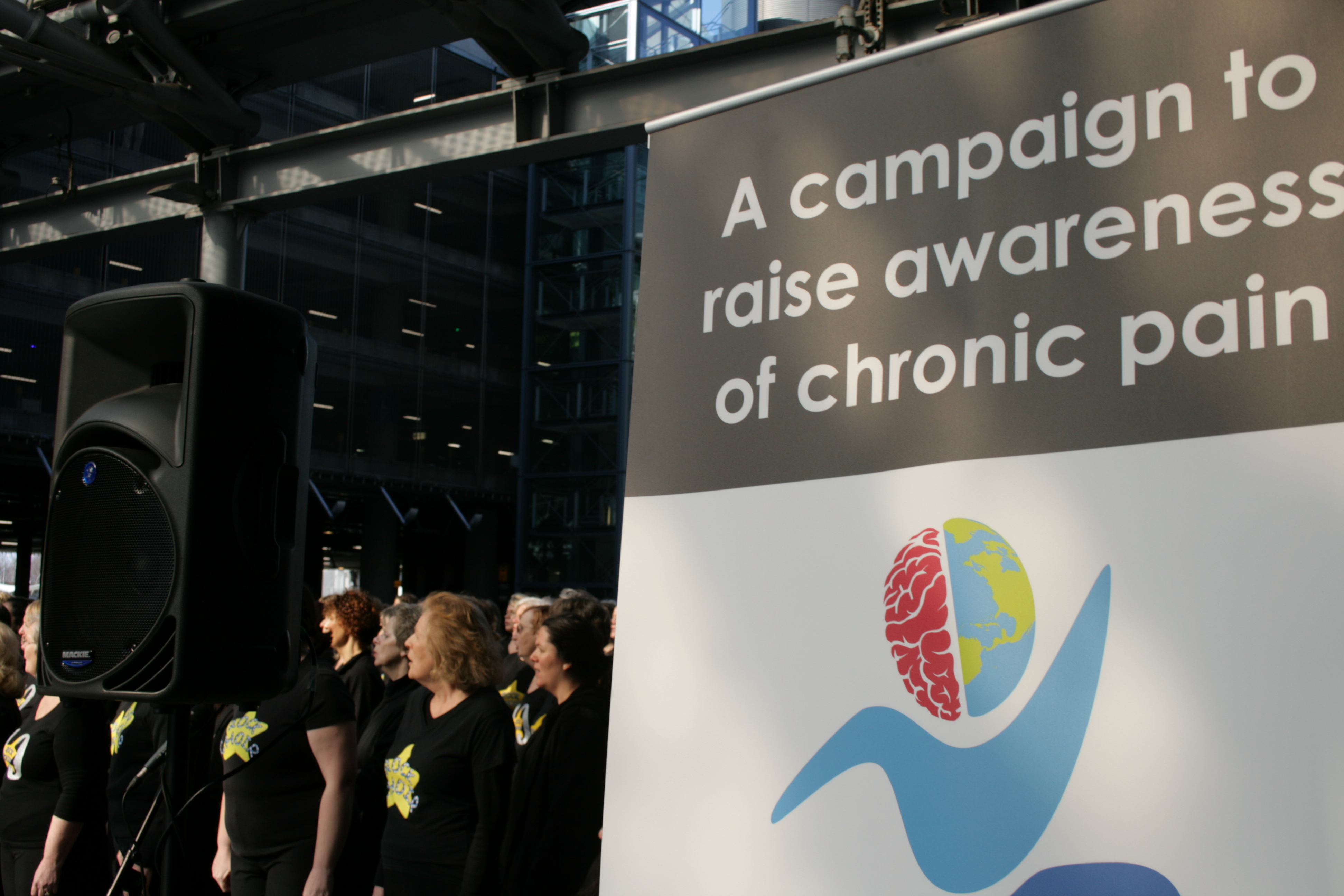
UP and Rock ChoirAlongside Pain Coach has been the recent launch of UP | Understand Pain, a campaign that I co-founded with Georgie Standage. Our first event was the hugely successful @upandsing day at London Heathrow when we had some 700 Rock Choir members singing out for pain.

We promoted our messages:

  • Chronic pain is the number one global health burden
  • We can do something about it by understanding pain

We are now planning the next stages that includes Pain Coach days for people suffering chronic pain and their carers. The first date will be publicised soon via social media.

We CAN reduce the suffering by thinking differently and acting differently. This is true for individuals, policy makers and healthcare organisations and members.

For information about the clinics, Pain Coach and UP, please contact Jo on 07518 445493.

Photos from the UP launch day on 7th March at London Heathrow

Great memories from a wonderful day! What a launch! And now we are straight into planning for the next events.

Keep checking back to the website as we update and add information about painful conditions, problems and how understanding your pain starts you on the road to overcoming your problems. We are creating an education arm to run events and courses for understanding pain and the simple things you can do to change your pain.

UP and Rock ChoirUP launch dayIMG_4397