#upandrun Pain Points (3) ‘Pain is whole person’

One of the final tapering runs, in the sun #upandrun

Pain is whole person

What does this mean? Put simply, pain is experienced by the person and not by the bodily location or part. In the case of back pain for example, it is not the back that is in pain. Instead it is the person who experiences back pain. This is no different to thirst in as much as the mouth does not experience thirst and head off to get a drink. The person does.

Now, what does ‘whole’ refer to? Again this is a key point of understanding. There are no separations. We are whole. The lived experience, what it is like to be ‘you’ in any given moment, emerges from the meeting of thoughts, perceptions and actions (enactivism).

One of the reasons why considering the whole person is so important is because it is the person that we treat. Pain is poorly related to tissue state, but it is well related to the state of the person. It was Oliver Sacks, the famous neurologist and writer, who stated that it is as much about the person as the condition. He was a man of great compassion and insight.

Conditions in name are lists of signs and symptoms. They are brought to life by the whole person in a unique way with all his or her thoughts, feelings, emotions, expectations, hopes, priors and beliefs, each in a different environment and context. A huge number of variables exist within every unfolding moment. Listening to the narrative illustrates this, which is why deep listening is important.

The model that best represents the whole is the biopsychosocial (BPS) model. Truly using this approach means that the biology, psychology and sociology of pain are considered, in relation to each other. It is in the middle of these overlapping dimensions that the person’s experience sits. This is what we seek to improve, the lived experience.

When we focus on the person and what they want to achieve in their life, we can design a programme that encourages and supports them to take steps in that direction each day. This can only be achieved by thinking about the whole person.

RS

#upandrun Pain Points (2): pain and injury are not the same

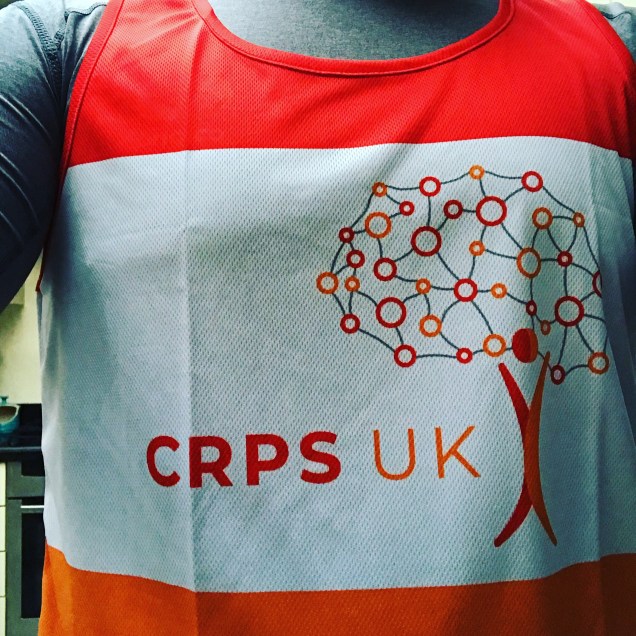
CRPS UK running vest for the Brighton Marathon

Pain and injury are not the same

There is a straightforward difference between pain and injury. Pain is subjective and injury is objective. Pain is a lived experienced. An injury is a disruption of the body tissues. You cannot see pain. Usually, you can see an injury.

Unfortunately the words are often used interchangeably. Further, there is the belief that pain and injury are well related. However, we have known that this is not the case for many years. Pat Wall, one of the forefathers of modern pain medicine and science, spoke about this in his famous 1979 lecture. Since then there have been countless studies showing that pain is part of how we protect ourselves and related to the state of the person within a particular context.

We have many stories of varied pain responses to different injuries. Sports people continuing to play with sprains and fractures, soldiers sustaining severe physical trauma reporting no pain, and the large proportion of people suffering the symptoms of IBS without any notable pathology. More-so, there are no investigations that show pain. Pain cannot be seen on an X-ray or an MRI scan.

We must be clear. People suffering pain must understand why they feel pain, why and how it can persist, and then focus on the steps that they can actively take to move on and get better. Misunderstanding pain is one of the main stumbling blocks. Erroneous thinking results in wrong decisions about treatment and self-care, but also impacts upon the sense of empowerment, belief in oneself to improve and hope.

Truly understanding pain helps the person to let go of unhelpful and fearful thoughts and to build confidence (in moving for example). It creates a strong foundation from where the person can build and gather momentum towards their picture of success.

RS

Pain Points (1)

Pain is what the person says it is

This may sound obvious but I think that we need this to be loud and clear. There are still too many people who say that they feel that they are not believed when they describe their experience.

I started my career in healthcare in ’93 training to be a registered general nurse. My fascination with pain began in the theatre recovery rooms when I noticed how propel responded so differently. The ‘size’ of the operation did not seem to matter. How the person was, in other words their state, really did.

Studying pain, I came across a quote from McCaffery (1968). She stated that it was ‘…whatever the experiencing person says it is, existing whenever the experiencing person says it does.’

This has ever-stuck with me. Everyone behaves in such a way as to meet their needs. When a person describes their pain experience, these are not merely words. It is an expression of need. In chronic pain, we must ask why is pain a predominant feature of this person’s life? What are the needs that must be met for the suffering to ease?

To understand this, the person must be free to express their lived experience from the first person perspective. As clinicians and therapists, we can only gain insight through deep listening within a supportive, encouraging and compassionate environment.

Deep listening involves being present and paying full attention to the person. Not only do we hear their words but we see how they are embodied and delivered. Getting to know our own biases and beliefs allows us to let these go so that there is no ‘filter’, just pure awareness. This begins the therapeutic process.

RS

Understand Pain Talk & Workshop 22nd May

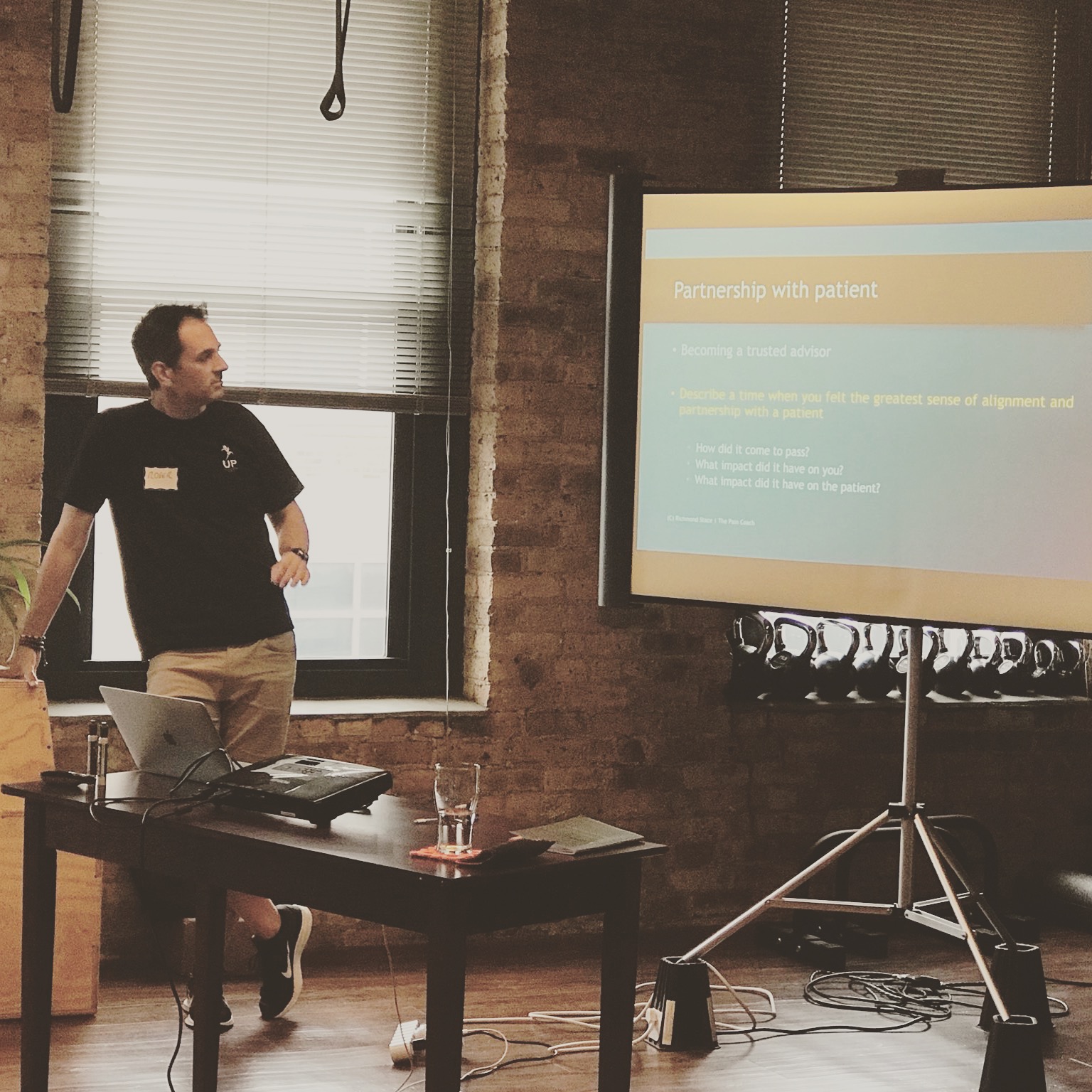
Richmond at The Understand Pain Workshop

The Understand Pain Talks and Workshops are our way of getting out into communities and listening to people: the voices of society. A suffering society. At UP, our purpose is to contribute to society by showing people practical ways of reducing their suffering by living their best lives.

Understand pain and move on to live a fulfilling life

On Wednesday 22nd May, Richmond will be talking and running an UP workshop in New Malden.

This event is free, although we always welcome donations to fund our going work.

Click here to get your place


Training so far

Richmond Stace in Glasgow
Running in Glasgow

Touch wood things are going pretty well. Training is totalling 70-80 km per week with 1-2 longer runs, interspersed with shorter dashes and trundles. As a trainer friend said to me once, ‘Just get to the start line without an injury and you’ll be ok’. There is some truth in this of course, but with the Brighton Marathon coming up soon, followed by the two ultras in May and July, the mileage is key.

If you’re interested in running, the following  section outlines my plan. Feel free to skip on!

#upandrun ~ hashtag on Twitter to follow and tweet

Last week I set myself a plan to run 1 x 30 km and 4 x 10 km, totalling 70 km. It felt good and was easily slotted into the working week. This week I am practicing two longer runs back to back and will continue with this trend. Today was just over 22 km and tomorrow I will do a minimum of 30 km on slightly tired legs. Either side will be a few 10 km runs when I try to push the pace.

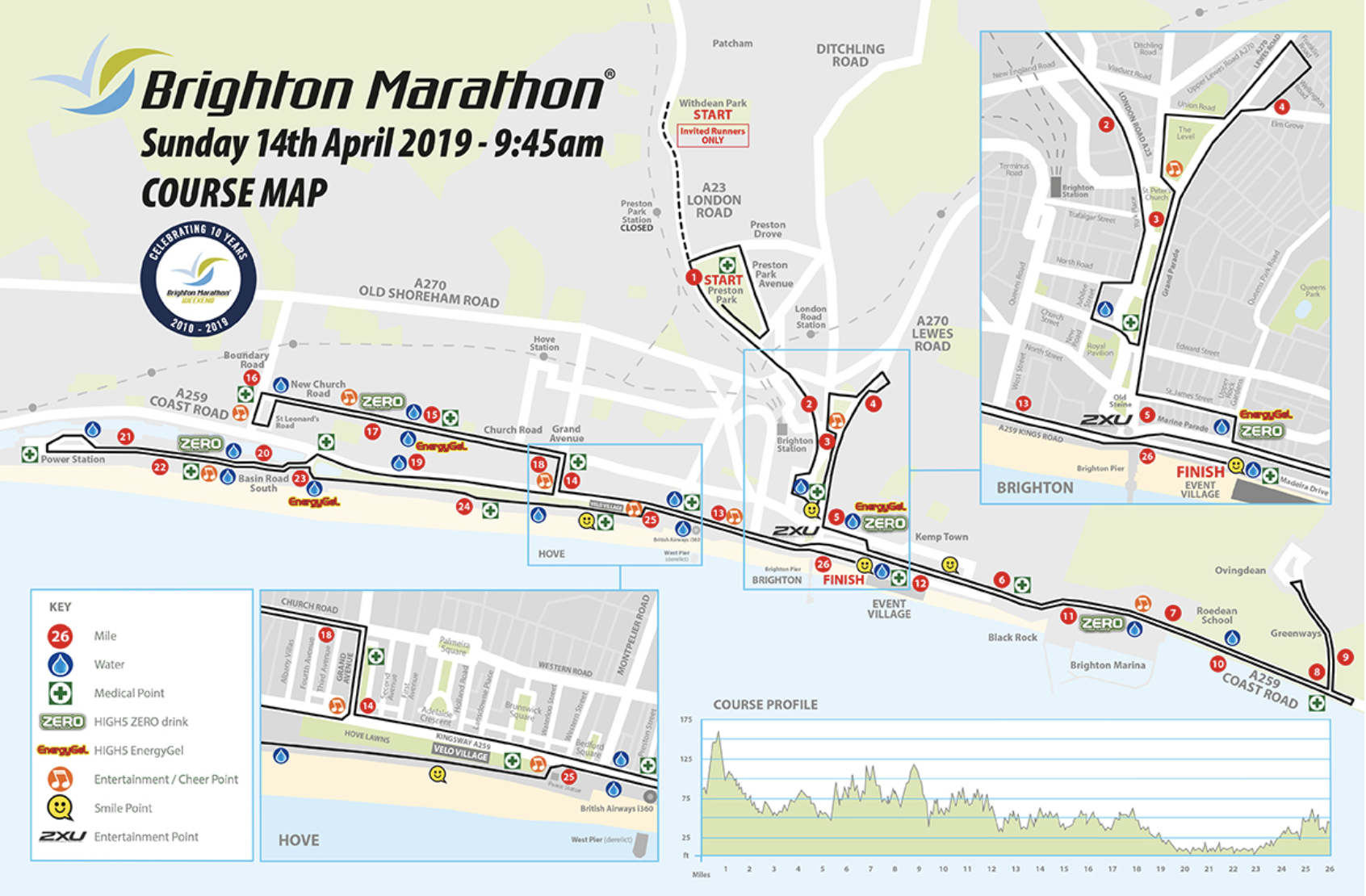
Map of Brighton Marathon

There are 5 weeks until the Brighton Marathon (Sun 14th April). The last week or so will be tapering and fuelling. Prior experience of ‘the week before’ tells me that I need a good plan. This includes plenty of mindful practice, imagery, easy movements, eating well and rest. I have found it to be a twitchy time with a unique restlessness of mind-body. This will be a good test.

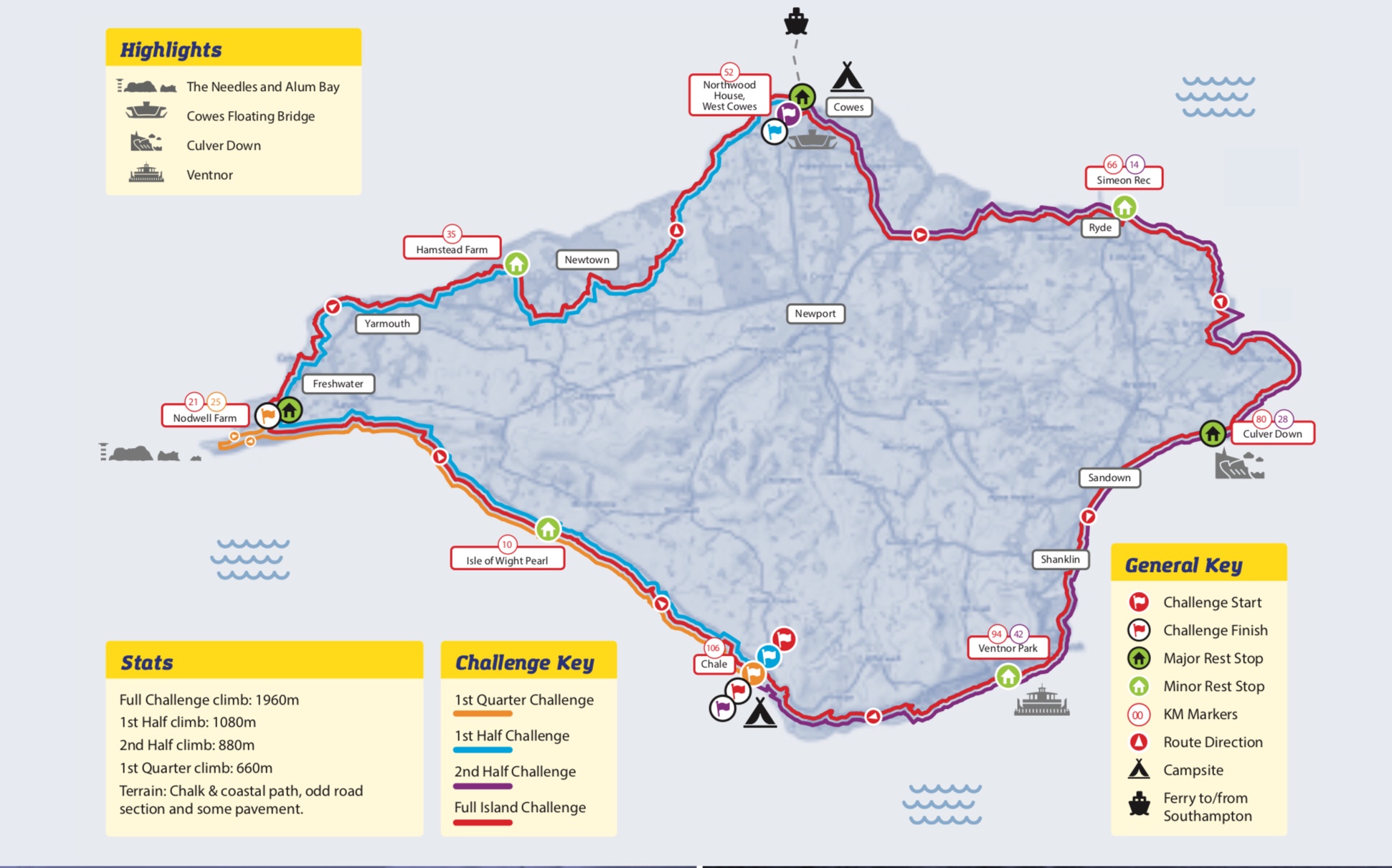
Map of the Isle of Wight Challenge

Soon afterwards comes the Isle of Wight Challenge. There will be a few weeks of continued training with back to back longer runs and again the tapering a week or two before the 2-day event at the start of May. A longer gap before Race To The Stones (July) means resuming the mileage in warmer weather.

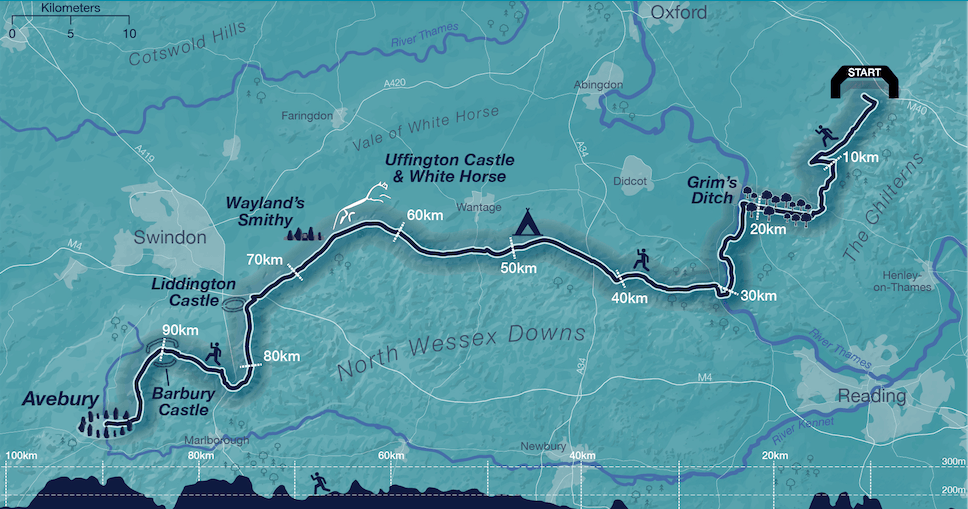
One of the pluses of these ultras is the scenery. I have been to the Isle of Wight and enjoyed the spectacular views from certain well known spots. The Challenge allows for the experience of the complete tour! That excites me. As does the route from The Chilterns, across the top of the North Wessex Downs, along the ancient path–5000 years!

Map of Race To The Stones

The Brighton Marathon #upandrun is a joint project, UP and CRPS UK. The money we raise through sponsorship, the quiz night (details soon), auction and raffle will support our on-going work to make a contribution to people’s lives and to encourage society to revise the understanding of pain.

Further, look out for the run of UP workshops. The aim is to offer these across the UK if we can raise sufficient funds. You can support us << here >> . If you suffer chronic pain or know someone who does, you’ll understand the importance of this project.

RS

Getting the best of Christmas

5 top tips if you suffer chronic pain

If you are suffering chronic pain, here are 5 tips to maximise your festive spirits and joy. You can decide upon your approach and give it your best by following some simple principles.

1. Make a plan

What is your picture of success? How do you want Christmas to be? What can you focus on that would make it memorable for the right reasons?

The questions we ask ourselves, we will always answer. So, make sure you come up with ones that self-encourage, helping you to focus on what you want, rather than what you do not want.

Think and act like the person you want to be

Make a plan each day, prioritising the key moments, punctuating them with rest and recovery time. You can share your plan with those you’ll be sharing the day with so that everyone is on board. Of course, the best plans do not always turn out the way we want, so we need to be flexible. However, if we try to stick to it in the best way that we can, often made easier by writing it down, then we are doing all that we can to be successful.

2. Motion is lotion

This is a way of nourishing your body (tissues — muscles, joints, tendons etc.). The key is to be consistent through the day. In essence, the movement is ‘pumping’ blood and hence oxygen into the tissues as well as removing the build up of toxins (that cause sensitivity).

The brain is embodied, and needs movement to survive — the brain needs a body. Pretty much everything that we do requires movement. Anything that gets in the way of the movements necessary to meet our needs will raise the perceived threat value. As many readers will know, pain is well-related to perception of threat and the state of the person, and poorly related to the tissue state.

Move to groove >>> any movement is a good movement!

A simple way of using ‘motion is lotion’ is to move and change position every 15-20 minutes, and then stand up and move around every 40-60 minutes. These are ball-park figures and it is important to work out your own need for movement. Further, you may like to use prompts and reminders until this becomes a habit.

3. 3 breaths

As often as you can remember (use reminders for this as well), stop and pay attention to three full breaths. Notice the moment when you first breathe in, the sensations in your body, and as you breathe out, the sense of letting go.

Attention is one of the skills of being well. A famous study was entitled, ‘the wandering mind is an unhappy mind’; in other words, the more we can pay attention to what is really happening, the happier we feel. Paying attention to your breath is a simple way to develop this skill.

Notice how you relax and muscles ‘let go’ as you breathe out. This is because on the out-breath, the parasympathetic nervous system is more active. This branch of the autonomic nervous system is responsible for all the important healthy functions behind the scenes: digestion, sleep, energy, anti-inflammatory activity and more.

5/5 breathing >>> count slowly to 5 as you breathe in, and count slowly to 5 as you breathe out. Continue for a minute or two, or longer

We have no direct access to our biology. It is in the dark, so to speak. However, there are one or two things we can choose to take control over to an extent. Breathing is one, with all the benefits that come with the innumerable practices that have been ‘breathed’ over the centuries.

A further use of the 3 breaths is when you feel tense, pain, frustrated, angry, upset or any other emotional state. Notice how when you pay attention to the breath, those feelings ease. This is because you have stopped fuelling them with the thoughts.

4. Meaningful connections

We need each other. We are design to connect and share and be generous. Have you noticed how your feelings change when you do something for someone else, no matter how small or insignificant that it may be? In fact, it is the little things, consistently, that make the difference, especially in a relationship.

How great does it feel to be with people who care about you, and you care about? Notice how that feeling builds when you pay attention to it (re-read the bit on attention above if necessary). Become aware of those great feelings and sensations in your body when you merely think about a special person.

Even when you don’t know the person you are encountering, can you make the connection meaningful by passing the time of day, and smiling? Of course you can! This can become the way you do it; your style.

Watch other people interact, share and be kind to each other. You will change state and feel it. Pay extension.

One way of connecting is by touch. Again, by design we have a system dedicated to light touch that is a direct way of soothing another, showing care and concern and evoking a healthy biological response. This is also a simple way for a partner to share a moment with you.

The key to feeling the effects, is to be present. This is the only moment, right now…it’s gone, and here is another…gone, and so on. Being present means that you can pay attention to what is actually happening, rather than being embroiled in the mind’s wanderings. To be present is also a skill to practice.

5. Smile. Just because you can

Notice what happens when you bring on a gentle smile. A soft upturn of the corners of your mouth. You can choose to tie this in with the now well-known practice of gratitude. The (biological) state of gratitude is one of the healthiest and an ‘antidote’ to suffering states.

Before the practice, it is important to acknowledge that all states are normal and part of the spectrum of feeling states. We need all of these states of course, as they communicate a need.

What are my needs right now? This is a great thinking tool, as you step back from being caught up in it all, and realise what it is that you need to do in this moment: move, breathe, eat, re-frame a thought etc.

What are my needs right now?

To practice gratitude is to become aware of something in your life that you are grateful for. There are many things that we can chose. Of course, whether they become apparent depends on your mood. A handy mantra here is: for a good mood be grateful, in a bad mood be graceful.

Practice: think of a moment in your life when you felt truly grateful for something. Focus your full attention on this memory, re-living it using all your senses, noticing which senses amplify the feelings. Is it the sights, the sounds, the feel? As you continue to focus on the feelings as they arise in your body, notice how they build.

Moment to moment noticing of things to be grateful for and those that bring you joy is a practice; a skill. For instance, you can decide to approach the day by looking out for things that make you laugh or smile. Then you practice.

The fact of the matter is simple in principle. The challenge is to keep focused and pay attention to what is really happening in the face of the many distractions. It is to realise that we live out a story that can appear to have been written for us. There’s some truth here in as much as we are fed beliefs from a young age, many of which are wrong, yet can limit us as we grow. Realising that you do not have to continue with the same story if it is full of suffering, is the first step to moving onward. Many don’t realise their potential, feeling that somehow, this is it. Not true. Is it time for a new story for you?

What will be your story from now?

And so, what will be your approach? How are you going to do Christmas? How are you going to do life? What is your picture of success? What principles must you follow each day to get those little wins on the way forward? Make a plan, get the right support and encouragement around you, and go for it. Each person is a miracle when you think about how we came into existence and how we are designed to grow and serve a purpose.

Merry Christmas.
Sanjay’s story of overcoming pudendal neuralgia

Sanjay on his bike has overcome pudendal neuralgia

A story of overcoming pain and pursuing a purpose

Sanjay came to see me about a persisting and most troubling painful problem that is common in cyclists, pudendal neuralgia. We worked together towards his picture of success, following the principles of the Pain Coach Programme. As ever, the focus was to understand pain and move onto live a fulfilling life.

The old tale ‘good, bad, who knows?’ illustrates the continuity of life, or impermanence, as we live life’s ups and downs. This is such a narrative here as you read about the joy of cycling, the suffering caused by the pain and the consequential limitations, the freedom of overcoming pain, the birth of an idea and the use of strengths to create something new, with purpose.

Here is Sanjay’s story in his own words.

Cycling passion

Most keen cyclists have experienced the addictive nature of being on a bike, the sense of freedom, speed and the happy effects of serotonin. I always loved riding my metallic blue Raleigh Grifter as a kid and unfortunately didn’t have an opportunity to upgrade to a bigger bike once I out grew the Grifter.

Many years later I rediscovered cycling again when my arm was twisted by colleagues at work to take part in the London to Brighton charity ride. I loved the experience and fell back in love with cycling again. My time on the bike increased and the challenges got harder.

It took a few years to build up the confidence to join a cycling club, but when I did I never looked back. I met an amazing group of new friends and inspirational people.

Saddle sore

I would generally ride a few sportives every year and managed to get a saddle sore after a sportive a few years ago. I’m not very good at staying off the bike and didn’t help the healing process by getting back on the bike before it healed properly. This led to a persistent saddle sore. After various antibiotics creams and tablets the sore still persisted. I had based most of my free time and social life around the bike so found it challenging mentally when I wasn’t able to ride.

One day at work I suddenly developed a pain around my sit bones that extended down my leg, it felt like a strange pain, almost electric and was worse when I was sat down. As if the saddle sore wasn’t enough I now had another issue to deal with.

Search for treatment

Over a period of a couple of months, I saw 5 different doctors and 4 different physios and still didn’t have any improvement or diagnosis. At times, it felt like the pain was getting worse and I was spending a lot of time on my feet to avoid sitting. Depression was starting to sink in as a result of the pain and inability to do the normal things that I enjoyed doing.

I decided to get an MRI scan done and this showed inflammation at the point of pain near the sit bone. This provided some hope so I then started treatment with a physio to treat this condition and after a couple of months the pain just got worse. Next stop was a pro-cycling team physio and doctor who both worked together to finally give me a diagnosis. It wasn’t the news I wanted to hear, a trapped pudendal nerve. Also known as Pudendal Nerve Entrapment (PNE).

I turned to Google for advice and struggled to find any good news about recovery from the condition. The doctor suggested cortisoid  injections or a powerful antidepressant with the side affect of numbing the nerves. Knowing that these options were just masking the root cause I started working with a clinic that specialised in nerve injuries including the pudendal nerve. They had knowledge of the injury and I did have some progress however after months and months of treatment, I had only around 10% improvement and still couldn’t sit without pain.

Richmond

I was very low during this time and began searching for answers again. I came across Richmond Stace’s pain physio website and something seemed different about Richmond’s treatment. I quickly booked an appointment. I walked into Richmond’s office very depressed and without hope and walked out with the belief that I could recover. Richmond had a different approach to anyone else that I had seen. He helped me understand the cause of the pain and that knowledge led to empowerment and therefore belief that I could overcome the pain. Richmond provided tools including visualisation techniques, motor pattern training and mindfulness practices.

Richmond provided a programme of treatment and adapted and progressed the plan based on my progress. I started sitting again very quickly after treatment and running again after only a few weeks. I was back on the saddle for short periods after a few more weeks and back on the road riding again after a couple of months. It felt amazing to ride again after 8 months off the bike and gradually over time the pain completely disappeared.

Pursu

During the time I was having treatment with Richmond, my contract finished so I was no longer working. Richmond mentioned a book called ‘Screw Work Break Free’ by John Williams. I quickly bought and read the book and felt inspired to pursue something more meaningful. A few years earlier I had dreamt of creating my own natural and eco-friendly cycling nutrition brand and this felt like the perfect opportunity to start making the dream come to life.

Pursu nutrition bars cycling

As I was spending more time on my bike over the years I realised that most of the sports nutrition options on the market were highly processed, high in sugars and gave me stomach issues. I started making my own bars with real food ingredients and they tasted so much better plus my stomach was much happier.

The path to taking the products from my kitchen to a manufacturer was not an easy or quick one, there were many obstacles and the ability to adapt was key. I stuck to my values throughout the process and that included only using the best quality real food ingredients, sustainability and creating an inclusive brand that inspires people to ride and get involved in sports whilst eating well.

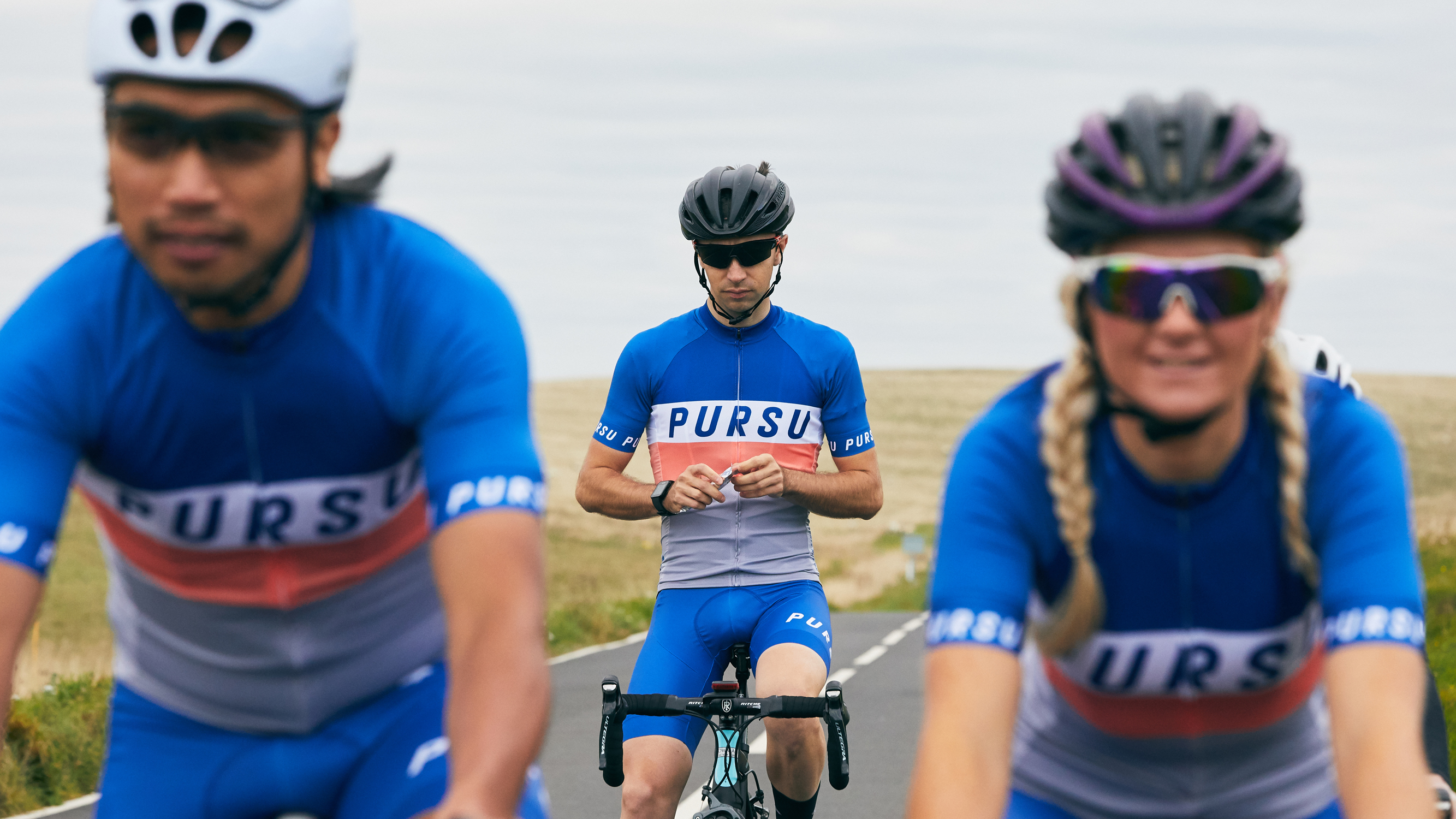
Pursu will be launching in March 2019 and the name has been inspired by the Pursuit cycling events and represents the Pursuit of better nutrition, the Pursuit of goals and ambitions. The launch bar packaging will be 100% home compostable and is made out of bio-based materials. In addition we have partnered with a great charity called Recycle (re-cycle.org) who supply unused bikes from the UK Africa to help improve lives through the power of bicycles.

It seems like a long time ago that I wasn’t able to see a way out of the constant pain. Not only did I recover completely, an opportunity to pursue a dream also came my way. Before I met Richmond, there was little hope for recovery from PNE. I know there are other cyclists with the same or similar conditions and I hope my story provides hope to them.

You can keep updated with progress and competitions on Instagram @pursunutrition and sign up for a launch discount at pursu.co.uk.


Pete and I

Sharing a purpose

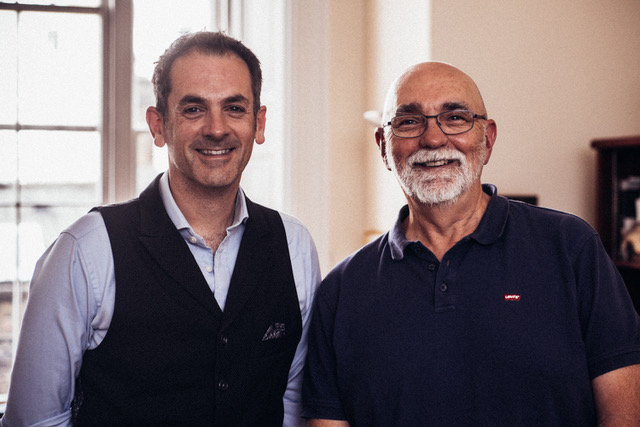
Pete and I share a passion and a purpose. We discovered our shared purpose over a number of conversations at dinners and conferences. More recently Pete and I recorded our chats, ‘pain talking’ (see here, here and here) to share our thoughts. There will be more to come, much Moore!

Our purpose: to change the way people and society thinks about pain. Why? Read on…

Pete Moore and Richmond Stace Pain Toolkit and The Pain Coach
Richmond Stace (The Pain Coach) & Pete Moore (The Pain Toolkit)

Today Pete is giving the Sir Michael Bond lecture, an annual British Pain Society event. The talk is unsurprisingly titled: Pain self-management; first choice or last resort? Punchy and to the point, as is Pete. And this is what the pain world, which is in fact the whole world with pain being a ubiquitous experience owned by only the first person, needs to jolt the right actions.

Pete and I could be considered outspoken, disruptive and bringers of change. However, not everyone is comfortable with change. We meet resistance. Not so long ago I spoke to a large group of mainly doctors, presenting some of the latest thinking in pain. The feedback was a fascinating mix of love and hate. Clearly some were hankering after change, recognising that the current predominant model has failed. One who only had courage with his or her feedback form accused the thinking as snake oil. I would love that person to sit in front of the likes of Karl Friston, Andy Clark, Mick Thacker and try to run with that argument!

But this is the reality. We have clinicians practicing old ways that refuse to change their thinking. This is of great concern as the millions across the globe continue to suffer (needlessly) as a result of the misunderstandings of pain. The situation must change: this is the purpose of Pete and I.

Self-management and coaching

Pete has been working tirelessly to engage clinicians and pain sufferers. He shows them that self-management is the way forward using his own story and The Pain Toolkit. An important principle that we must all adhere to is that only the person can ease their own suffering.

Whilst there can be a role for medication and intervention when chosen with good reason and used wisely, the main thrust should always be the person’s understanding of pain and what they do themselves. As I say to each person I see, you are with you all the time so you must be able to coach yourself with clarity and calm to take the best actions.

To understand pain is always the start point. The true insight into the cause of one’s own suffering unlocks the door of potential. This is why Understand Pain exists as a means to deliver the knowledge, skills and know how to society. At UP we have the vision of a world that understands pain. This would mean a huge reduction in suffering, more money available for other social concerns, people would know what to think and do, and treatment would be about encouragement of wise actions by the person.

Getting the best of people

It is always the person who suffers pain (not the body part) and hence we must think about the person and their life. And this is why The Pain Toolkit and Pain Coaching are successful in encouraging and inspiring people to live as a means to managing and overcoming their pain. Waiting for the pain to go before getting back to living just does not work. There is only this moment to take action, right now. The future never comes, so if you are waiting, it will be a long one!

Pete Moore and Richmond Stace
Richmond Stace and Pete Moore


Coaching and specifically Pain Coaching seeks to get the best of the person by giving them practical and working knowledge of pain. The focus is upon the person’s picture of success and how we get there step by step. All too often people think that they must just cope, get by, live with it etc. Of course, if this is your best hope then this is all that will be achieved. This is not the fault of the people. It is the problem in society — pain is a social problem. When society changes its thinking, the actions will change. Pete and I: this is our work. And we will keep going, encouraging people to understand, to use tools and practices each day and to build momentum towards a better life.

Today Pete will speak frankly. He will be entertaining, because he is, but he will hit the mark with the fact that self-management is the key ingredient. Without this there is little chance of progress.

I am thrilled that Pete has this opportunity. He deserves the stage and will undoubtedly make an impact. I will try to get there early and get a front row seat! Pete, can I wear a Liverpool shirt?

Oh, and we also both love rock n roll….

Why keeping in touch with your body is important

Body painting

This is a short blog about why keeping touch with your body is important

The body, your body, is always there. It is always changing and updating, but in essence a constant feature of the present moment.

The mind however, goes off. It travels forward and back at a whim so it seems. But reality is only here and now, the rest is just in thought. However, each thought, each feeling, each sensation and each movement are all embodied. They are also embedded within a context, an environment and a society.  The mind simply cannot be considered in isolation.

This in mind so to speak, means that what we focus on governs how we feel. Our emotional state is a biological state, orientating us towards a particular experience, to meet a particular set of needs. What is interesting is that when we focus our attention on the feeling itself, if it is a state of pleasure or joy or any other positive feeling, it grows. When we focus on a negative feeling such as anxiety or anger, what happens? Well, you can either try it or wait until the end to discover the answer.

The whole person

Regular readers will be familiar with my writings on the whole person. In short, the premis is that it is always the person as a whole who has an experience. For example, I feel pain in my hand rather than my hand is in pain. The importance lies in the need to address the person to successfully address pain. As I tell people I see, the biology of pain (and there is nothing specific to pain) is largely not where you feel it.

To feel oneself then, requires a completeness. A wholeness that needs both body and mind to be in the same place at the same time. Only when the two are together as one are we truly present. In our world where we learn early to escape the body from horrible feelings, emotions and sensations, this can seem like the thing to do. We are encouraged to drink, smoke, take drugs, buy something new and distract. Except trying to avoid and escape results in on-going suffering instead of facing and transforming. We cannot escape suffering in life. It is part of life. But no-one teaches us how to suffer. To know how to suffer is to reduce the impact and overcome the cause(s) of one’s suffering.

A simple practice

One simple way to be whole, and to connect and re-engage with the body is with the body scan. This is where you pass your attention through your body from top to bottom. You notice without judgement, with acceptance of what is, and an openness to all experiences and sensations. In so doing, you are whole, which is the true person.

The awareness, or check-in as I sometimes call it, is a way to address our biological needs. Checking in, I am aware that I need to move, to stretch, to drink, to eat, to scratch, to go to the loo etc etc. Without this bodily awareness, I miss the cues and conscious feelings of need states. And to miss out on the basics can add up over time. Place stress on top and soon our bodily systems are in survive mode, increasingly interpreting sensory information as possibly dangerous. What do we feel then? Headaches, body wide pains, irritable bowel, fatigue, poor concentration, low mood, anxiety and more.

Make a commitment

So what can we do?

We can decide to commit to a route of wellness and practice certain skills each day to build. Without wellness life is even more of a challenge. Part of being well is being present and we can only do so with body and mind together. Each moment is made up of our perception, action and cognition. They are inseparable, yet each adding something distinct the the richness experience.

If you like, now, you can sit or lie and pass your attention through your body to see what is what. Remembering of course, impermanence. Things are always changing, otherwise life would not be possible. So notice the ever changing biology at work. You can spend a minute or a few minutes or an hour. That’s the beauty of checking in. It is easy, and you can do it anywhere, anytime.


This is one of many practices and tools from The Pain Coach Programme

Talking pain ~ video series

Together with Pete of The Pain Toolkit, I have been talking pain. This is a simple way of getting across the key messages about pain in bite-sized videos.

The first chat was based on the 5 question challenge when Pete asked me how I ‘got into pain’, my story in other words, and then what I say to people who are seeking the quick fix, the future of how we will deal with pain and the role of social media. Today we dug down deeper into dispelling the myth of the quick fix as an option.

In brief, overcoming pain is one of life’s challenges. Embracing this as a problem to solve by living one’s best life delivers many possibilities. This turns the traditional thinking, which has not worked (otherwise chronic pain would not be the No1 global health burden), on its head; i.e. we get back to living by living, not waiting for something to happen, or relying on hopes. Instead we follow a route of mastery, creating lasting and positive change, achieving results and maintaining a consistent course towards a desired outcome. This IS the model of success and we can apply this here, in addressing pain.

So, there is no quick fix, instead a route forwards where we fill our lives with the good stuff! We use our natural resources and strengths, and become resourceful. Everything you need is right there, and once you release yourself from the old, limiting beliefs and conditioned thinking (I can’t…I won’t….tomorrow etc etc.), you can start taking steps towards success. Is this a pain-free life? Does it mean being ‘happy’ all the time?

Pain is part of life. The pain you may be feeling has persisted and is not indicative of a tissue issue or pathology in many cases. Instead it is an on-going protect state as more and more contexts and situations generalise as being a threat — even though they are not. We have to actively re-train this, gain control over our mind rather than the mind controlling us, because once we decide to commit to consistent practices that build health, wellness and joy, they shift us into a different state, or chemistry. That is how we overcome pain. The more we focus on treating pain, the worse the outcomes. The more we focus on the person living well, the better the outcomes — for what we focus upon governs how we feel and where we put our energy. What do you want? Where are you going to pout your energy? Into a life full of joy? Or a life full of pain?

It sounds easy when you put it like that! Of course it is a challenge and there are many ups and downs. But you do not have to let that get in the way of you deciding to commit to a new path, one that you follow to gain wins and success in all areas of your life — again, because you decided to. How often do you feel happy, just because you can? Now you can use that as a daily practice!

So, onwards we go, as this is the only direction of travel. We build our ability to change state into that of excitement, determination, joy, love, compassion and all the many other states .We can get into such high energy states by moving, breathing, visualising, connecting and many other simple day to day practices. It merely takes the decision to do so, the development of a routine and practice, or repetitions, just like strengthening a . muscle.

More answered questions to come! You can email us your questions (painphysiolondon@gmail.com) or come to twitter and tweet @painphysio

In the meantime, enjoy!

For more information about the The Pain Coach Programme, click here