Societal Impact of Pain 2017

Valletta panorama, Malta
Valletta Panorama: Andrey Danilovich

Societal Impact of Pain 2017 Meeting, Malta

The working group topics to be discussed:

  1. Pain as a quality indicator for health systems
  2. Building platforms to address the societal impact of pain
  3. Impact of pain on labour and employment
  4. Challenges, models and lighthouses in pain policy
  5. Evolving concepts in the definition of chronic pain: a dynamic process

I will be attending this symposium to take the opportunity to meet and talk to clinicians, policy makers and others who want to address the social issue that is chronic pain.

Regular readers will be aware that one of the first steps for UP as a social enterprise is to relaunch this website as a practical resource. This work is well under way. UP will the reach across the globe, connecting with people and clinicians who are seeking to be involved. There is great urgency in the need to tackle the problem of pain, not just for the current times but the next generations. We simply have to create new thinking that permeates across society. At UP we will be supporting the next generation of clinicians and healthcare professionals in various ways including sponsoring attendance at Pain Coach Workshops. UP also has plans afoot for the youth who we feel need to understand pain as a simple skill of well-being.

My hope is that I will connect and have discussions with like-minded and determined individuals who seek to drive change. If you are attending SIP and would like to meet for a conversation, please contact me here or via the form below.

Updates and news will be posted here, including during the SIP symposium.

RS

← Back

Thank you for your response. ✨

5 ways a partner can support and encourage you

Chronic pain can be the source of huge strain upon a relationship. Partners and other people close to the suffering individual can be at a loss as to what they can do to help. Sometimes their assistance is welcomed and other times not. It can be confusing and stressful. There are many ways that a partner can help and some will be individual to those involved. Here are 5 simple ways that a partner can help:

Be an extra pair of ears and eyes

During consultations with specialists or therapists, it can be useful for a partner to come along. Beforehand you can decide upon their role. The possibilities include:

  • listening and note taking
  • offering observations about what has been happening
  • watching and learning exercises so that they can provide feedback at home
  • just being there for moral support

Sometimes having someone else in the room, even a loved one, can be distracting depending upon what is being practiced. So do discuss this with your clinician for the best outcome.

Understand pain

When your partner understands pain they will be able to further empathise and act through compassion rather than fear and worry. We do respond and are influenced by the people we are close to, meaning that if they have a working knowledge of pain they will better provide support and encouragement.

Pain can and does vary as each pain experience is as unique as each unfolding moment. Knowing that pain is related to perception of threat rather than tissue damage or injury, along with some of the main influences (e.g. emotional state, context, tiredness) helps to navigate a way forward. To overcome pain the person learns to coach themselves, making best choices in line with their picture of success. Sometimes we need help or someone to listen to us whilst making these choices.


IMG_4241

A hug

Touch is healthy, especially from a loved one. Someone recently told me about how a hug from her children relieved her pain. Why? The release of oxytocin for a starter. The feelings of compassion and love can cut through all other emotions and feelings, which is why the development of self-compassion is one of the key skills of well-being.

Sometimes a hug can be painful of course, depending on where you feel your pain. If this is the case, then simple touch somewhere else is enough. Seek to notice the good feelings that emerge in you: what do they feel like? Where do you feel them? Concentrate on them. And if you are not with that person, just imagine a hug or a loving touch. This triggers similar activity, just like when you think about that beautiful scene in nature, your body systems respond as if you are there ~ our thinking is embodied.

Practice the skills of well-being together

A good example is metta or loving kindness meditation that cultivates self-compassion. It is best to gain instruction 1:1 to start with and then use a recording as a prompt until you are familiar with the practice. Group practice is also good when the collective or community creates a soothing atmosphere in which to practice.

At home, practice metta with your partner. Doing it together, you form a bond as you spend meaningful time together. You can also practice the exercises together. These are nourishing and healthy movements with the purpose of restoring confidence as well as layering in good experiences of activity to overcome pain.

Spend time together doing something meaningful

We are designed to connect. The chemicals we release and experience as that feel-good factor, do so when we have meaningful interactions. Pain all too often appears to limit choice and our tolerance for activity. However, on thinking about what we CAN do rather than what we cannot, we begin to build and broaden the effects of choosing positive action.

Positive action is all about focusing on what we can do: e.g./ I can go for a coffee with a friend for half an hour to gain the benefits of connecting, moving, a change of scene etc. and I will concentrate on these benefits. Make some plans, working within your current tolerance level, knowing that you are safe to do so, and follow them through by keeping yourself pointed towards the picture of success*. You can then gradually build your tolerance by pushing a little with increasing confidence.

There are many other ways that a partner can be involved. The key is to communicate openly and make plans together ~ here is a great insight into communication by Thich Nhat Hanh.


* Clarifying your picture of success gives you a direction and the opportunity to check in and ask yourself: am I heading in that direction or am I being distracted?

Please note: Whilst the practices above can appear to be straightforward, you should always discuss your approaches with your healthcare professional


Why am I running the London Marathon?

unnamed
16.3 miles

We are 10 weeks away from the London Marathon and I am getting excited about the day. The training is going well, and I am using others experience and knowledge as a yardstick, reaching 16 miles so far. A bit more nudging in March and I’ll be set to join the thousands of other runners, coursing round the great city of London.

So why am I doing this? The answer is simple. To raise awareness and money to address the biggest global health burden, chronic pain. It costs us the most economically but of course the amount of suffering worldwide is immeasurable. This must change and we can change it by shifting our thinking to be in line with what we know about pain. With an understanding of pain, individuals realise their potential to overcome their pain and live meaningful lives. This is achievable, and in this day and age we have the means to reach across the globe to give people the knowledge and skills. This is the story of UP | understand pain, which was co-founded by myself and Georgie as a pain awareness campaign. Now we have big plans to take the project to another level to achieve our aim of changing the way society thinks about pain.

Complex Regional Pain Syndrome (CRPS) can be a terribly disabling condition, characterised by intense pain. Many people have not heard of CRPS and within healthcare diagnosis is often delayed. This is a problem because like most conditions, early identification allows for treatment to begin. The treatment must be based upon the person’s understanding of the signs and symptoms, for there is an understandable fear that drives on-going protection. Therefore, as with any injury or pain problem, the early messages must be right and make sense.A person’s belief drives their behaviours and subsequent thinking, so a good working knowledge of pain is vital ~ understand pain to change pain.

CRPS UK gained a place in this year’s London Marathon, and having spoken twice at their conferences and being in regular contact, I ‘volunteered’ to be the runner. I was very excited to be chosen and gratefully accepted, which is now why I am out in the Lycra every other day (I will not be posting a picture of that!). CRPS UK is a charity dedicated to advancing the understanding of the condition and supporting people with CRPS. The people involved are doing incredible work to raise the profile and have achieved so much through their dedication. Please visit their website here.

You may be someone suffering chronic pain or know someone who is regularly in pain. Most of us do know someone and can see the effects upon their life. This is not just pain from backs and joints but pain related to cancer, heart disease, arthritis, irritable bowel syndrome, headaches, migraines, rheumatological diseases, pelvic pain and many other conditions that hurt. The work being done by CRPS UK and UP aims to change this and provide resources and training that gives individuals and society a way forward, to overcome pain and live well.

Please show your support here and donate generously

Thankyou!!

CRPS Diagnosis

CRPS Diagnosis

Complex Regional Pain Syndrome (CRPS) is a collection of signs and symptoms that define this particular condition. A syndrome according to the Oxford Dictionaries, is a ‘group of symptoms which consistently occur together, or a condition characterized by a set of associated symptoms’. Therefore, we can clump together any set of symptoms and give it a name, which is really what has happened over the years in medicine. The important point is that when we use the term, we should all know what we are talking about and know what we should look for to make a diagnosis. In other words, a set of guidelines.

The Budapest Criteria delivers guidelines for CRPS, which you can read about in this paper by Harden et al. (2013). The clinical criteria (see below) acknowledge the sensory, vasomotor, sudomotor/oedema and motor/trophic categories that really highlight the complexity of CRPS. Pain is often the primary concern, with people describing their incredible suffering in a range of graphic ways. However, it is not just the pain that causes suffering but the way in which the life of the person changes together with their sense of who they are and their sense of agency seemingly lost. One of the roles of the clinician is certainly to help restore that sense of who I am, a construct that is built from many of life’s ‘components’.

Budapest Criteria

1. Continuing pain, which is disproportionate to any inciting event

2. Must report at least one symptom in three of the four following categories

  • Sensory: Reports of hyperalgesia and/or allodynia
  • Vasomotor: Reports of temperature asymmetry and/or skin color changes and/or skin color asymmetry
  • Sudomotor/Edema: Reports of edema and/or sweating changes and/or sweating asymmetry
  • Motor/Trophic: Reports of decreased range of motion and/or motor dysfunction (weakness, tremor, dystonia) and/or trophic changes (hair, nail, skin)

3. Must display at least one sign at time of evaluation in two or more of the following categories

  • Sensory: Evidence of hyperalgesia (to pinprick) and/or allodynia (to light touch and/or deep somatic pressure and/or joint movement)
  • Vasomotor: Evidence of temperature asymmetry and/or skin color changes and/or asymmetry
  • Sudomotor/Edema: Evidence of edema and/or sweating changes and/or sweating asymmetry
  • Motor/Trophic: Evidence of decreased range of motion and/or motor dysfunction (weakness, tremor, dystonia) and/or trophic changes (hair, nail, skin)

4. There is no other diagnosis that better explains the signs and symptoms

Importance of diagnosis

A diagnosis made in the same way, based on the same criteria means that clinicians, researchers and patients alike are all discussing the same condition. This may seem pedantic but in fact it is vital for creating a way forward. Clinicians mus know what they are treating, patients must know what they are being treated for and researchers must know what they are researching. Sounds obvious but let’s not take it for granted. So the Budapest Criteria has pointed all those with an interest in the same direction. Consequently we can focus on creating better and better treatments.

As with any painful condition, the start point must be understanding the pain itself. The following questions arise that we must be try to answer:

  • why am I in pain?
  • why this much pain?
  • why is it persisting?
  • what influences my pain?
  • what do I, the bearer of the pain, need to do to get better?
  • what will you do, the clinician or therapist, to help me get better?
  • how long will it take?

New thinking, new science, new models of pain over the past 10 years has advanced our knowledge enormously. Understanding how we change, how our body systems update, how we can make choices as individuals, and the practices we can use to change our pain experience to name but a few, create great hope as we tap into our amazing strengths and resources as human beings. Detailing the treatment approaches is for another series of blogs, but here the key point is that the first step in overcoming pain is to understand it. It is the misunderstanding of pain that causes erroneous thinking and action, which we can and must address across society — pain is a public health issue. Chronic pain is one of the largest global health burdens (Vos et al. 2012). It costs us the most alongside depression, and I believe that this need not be the case if and when we change how we think about pain, based on current and emerging knowledge.

“The first step to overcoming pain is to understand it”

upandrunThis is the reason for UP | understand pain, which we started in 2015 with the aim of changing the way people think and then approach their pain, realising their potential and knowing what they can do. We are about to launch the new website that is packed with practical information for the globe to access online. Alongside this we have plans to create a social enterprise that will purport the same messages, coming from the great thinkers and clinicians who are shaping a new era in changing pain.

In April I will be running the London Marathon to raise awareness of the work of both UP and CRPS UK. You can support the work that both are doing to change pain by donating here

Thank you!

Richmond to run London Marathon 2017 for UP and CRPS UK

I am very excited to announce that I will be running the London Marathon this year jointly supporting UP and CRPS UK.

Please support us here by donating whatever you can spare to help reduce suffering

CRPS UK is a registered charity that is focused upon supporting people with complex regional pain syndrome (what is CRPS?). CRPS is often a terribly impacting condition characterised by intense pain and accompanying symptoms that reach into every aspect of the person’s life. Having received little attention, CRPS is gradually becoming more recognised, thanks in great part to the on-going work of the team at CRPS UK.

Georgie, my co-founder at UP, came to see me several years ago with CRPS and therefore at UP we were thrilled to team up with CRPS UK. CRPS has been a condition that I have studied for many years, and having worked with many people living the condition, personally I am honoured to represent CRPS UK and UP in this way, hoping to make a contribution by raising money to allow the work to go on.

Chronic pain is the number one global health burden. Think about all the conditions that hurt and cause pain. This is not just musculoskeletal pain, but all pain — cancer, gastrointestinal disorders, headaches, migraines, pelvic pain, heart disease, post-surgical pain, infections, inflammatory disorders! If pain was understood globally, by society, by individuals, we would know what we can focus upon to overcome the problems and live as best we can in a meaningful way. At the moment this is not the case. There is still a focus on the tissues and pathology as an explanation, but this is not the case. We have known for years that pain and injury are poorly related, and that there is much more to pain to know and work with to create the conditions for change.

This is what we aim to do at UP and CRPS UK. Pain is a public health problem affecting millions in many different ways: home life, relationships, social activities, work to name a few. People need to know the ways in which they can navigate these issues and move onward. The money you give will directly support projects and initiatives to reach this end where we hope to influence the policy makers and healthcare providers, but in essence to help the individual ease his or her suffering.

Thank you.

Richmond


We have done the run!

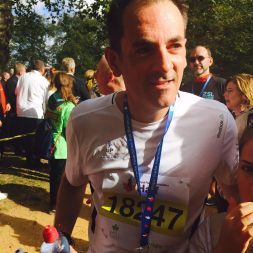
up-maraThe Royal Parks 1/2 marathon today (9th October 2016) ~ we have done the run!

Team UP completed the run around the Parks and London today to raise awareness for UP and money to launch our campaign. It was a great success!

The Team: Richmond Stace, Jonathan Vickers, Peter Brown, Chris Mutch & Ann Dunmall

On a beautiful morning, we completed the course in good time. Ann even sang in the Rock Choir performance on the main stage!! Awesome!

We were very well supported by Jo, Lucy, Lucy H, Georgie, Mark and of course the volunteers and staff. A big thanks to Sally!

This success means that we will do it again. And again. The #upandrun will now be one of the ways in which we continue to raise awareness through exposure and conversations with people and other charities. UP will support runners in the UK and beyond by funding their place and supplying a running shirt while the runner raises money for UP. So if you want to run for us, get in touch ~ upandsing@gmail.com

You can still support us here: upandrun

And now for the feet to go up!

UP supports research into pain

cropped-screen-shot-2015-10-21-at-08-20-53.pngOne of our main objectives is to raise money to support vital research that will make a significant difference to the way in which pain is understood and treated. Such research is underway here in the UK. This is both exciting and necessary in moving forward our thinking so that we can have a significant impact on the global problem of pain.

Mick Thacker has been an enormous influence upon my work and beyond, and in fact I blame him entirely for my obsession with understanding pain! I still recall the lecture he gave when I had my ‘aha’ moment, realising that there was a way forward. Not looking back since, there have been incredible steps forward to where we are now. Mick has had a huge impact upon so many people over the years and this continues. We have a lot to be thankful for and I am grateful for the opportunity to support the work he describes below. I believe that this research is by far our best opportunity to truly understand pain.

‘We propose an interdisciplinary programme of research that focuses on a new approach to pain based on the Predictive Processing Framework (PP) set out by Profs Andy Clark, Jakob Hohwy, Anil Seth and Karl Friston. The main feature of this proposition is that pain arises from circular influences that link the body (including a brain) with the world. This approach sees pain as an action-orientated perception that attempts to both identify and alleviate/limit the potential causes of actual, potential or ‘imagined’ danger to the self. We believe that this approach will extend well beyond the current bio-psychosocial model.

Working closely with philosophers and neuroscientists we will reframe our current understanding of pain using models of PP and will marry empirical based experiments into nociception with current philosophical perspectives. We plan to use these newly acquired perspectives to propose and plan a series of empirical studies that examine pain from the perspective of PP. The direction of these studies are likely to employ many different approaches across the (cognitive) neurosciences including human psychophysics and neuroimaging as well as the development of modelling paradigms involving artificial neural networks and related techniques allowing us to fully understand and evaluate pain and it’s impact on the person.’

Mick Thacker PhD. MSc. Grad Dip Phys. Grad Dip MNMSD. HPC. FCSP.
Senior Consultant AHP (Pain) Guy’s & St Thomas’ NHS Foundation Trust &
Centre for Human and Aerospace Physiological Sciences. King’s College London.
Pain Section, Neuroimaging. Institute of Psychiatry. Kings College London.
Adjunct Senior Research Fellow, School of Health Sciences. University of South Australia.

What research is UP supporting?

Pain being hugely complex and one of the greatest examples of a conscious experience means that we have many questions to answer. This includes an understanding of pain biology, pain psychology and the social dimension. Whilst all are important, it is the unification of these that is the lived experience, the phenomena of pain. This is what we must ultimately understand so that we can have a true working knowledge of what is going on and what we can do about it.

Hence we need a model that can deliver this depth of understanding and a basis for action. We are fortunate in that such work is going on as we speak, and it is this work that UP will be supporting. The yield will be the practical application of our knowledge about pain so that individuals can really know what they can do to move forward and overcome their pain. Such knowledge will also inform healthcare practice from the outset when a person presents with a pain problem — those initial messages are vital; they must be right as they often set the scene.

Chronic pain is the number one global health burden, which means that millions are suffering. This can change. This must change. This is the reason for UP.

Please support us in our mission and come and see us at The Royal Parks run on Sunday 9th October: http://www.justgiving.com/crowdfunding/understandpain

We are on twitter @upandsing and our hashtag for the run is #upandrun

RS

Why are we running in The Royal Parks 1/2 marathon?

DSC_0179Not long to go now! The day’s events look great fun, so do please come and see us so we can tell you (once we have our breath back!) what UP is all about and why we are raising money.

In short, UP is all about changing how people and society thinks about pain by delivering the right messages based on the latest science of pain. The widest reach comes via the internet and so we are working on a great website resource for all those who need to understand pain — people suffering, those affected by chronic pain and those delivering the care. We are also raising money to support contemporary research into pain, in particular the use of a practical model that explains pain and provides a way forward for people on a day to day basis.

Chronic pain is the largest global health burden, and most people don’t even know that!

Please come and support us! There are 5 of us running ably supported by Jo and Georgie. Georgie will also be performing with Rock Choir on the main stage.

Follow us on Twitter @upandsing where the hashtag will be #upandrun

If you would like to donate to the campaign, please click here and know that you are contributing towards a new movement to reduce global suffering.

Hope to see you there! Look out for the logo: cropped-screen-shot-2015-10-21-at-08-20-53.png

If pain

IMG_2528If pain was understood, there would be less suffering.

If pain was understood, the right messages would be given from a young age, sculpting behaviours based on what needs to be done.

If pain was understood, there would be no fear about it.

If pain was understood, we would focus on what we can do to feel better.

If pain was understood, it would be known that listening deeply is the first step to help someone transform their pain.

If pain was understood, it would be known that understanding pain changes pain.

If pain was understood, there would be an enormous amount of money available for a better society.

If pain was understood, it would sit in the realm of public health and not medicine.

If pain was understood, there would not be the reliance on medication.

If pain was understood, what would the world be like?

— this is the mission of UP | understand pain; to globally change the understanding of pain, because put simply, the world would be a better place if pain were understood.

http://www.understandpain.com