UP and running again

A journey of courage

IMG_4611

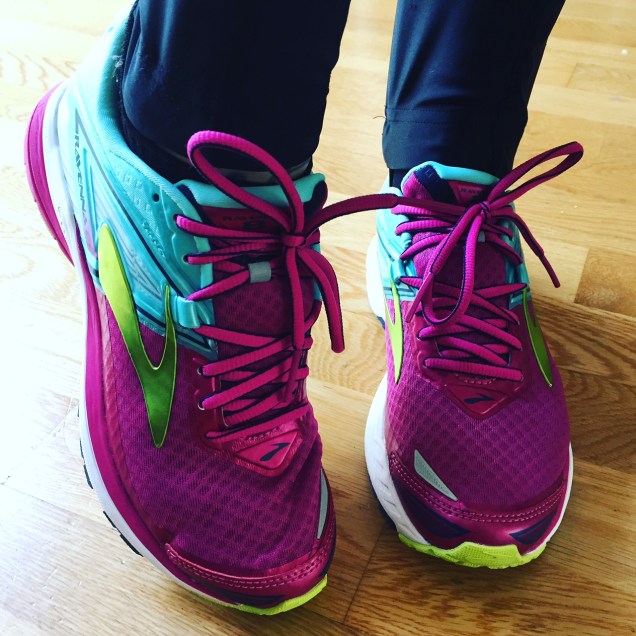
The London Marathon now in the past, we are focusing on the next run, The Royal Parks 1/2 Marathon in October. The details of the projects being co-supported with UP will be released soon, however we have two participants bravely embarking on the training journey. This is very exciting, but above all, full of meaning as they face the challenge of getting fit to run 13.1 miles. I know that they will do their best and we will be fully supporting them with a training programme and lots of positive encouragement.

Having just done the marathon for the first time, I know what it feels like to be thinking about running for long periods. However, the reality is never as bad as the thought, like most things. The actual run on the day is the icing on the cake, whereas doing one’s best along the way is success. This is a test. A test of oneself. And this is why it is such an incredible learning opportunity and a way to boost self-belief whilst improving physical health.

I will be documenting these two runners’ journeys and hopefully they will be writing their own blog entries. Sharing stories like this is inspiring to us all. We love to hear about and feel motivated by others’ achievements. They have achieved already by signing up. Now they can clarify their picture of success and think about what that looks like as they begin their experience!

RS


We are more than a brain

Brain On The Wall

Have we gone brain mad!

There was a great step forward when the brain was considered to be part of the pain experience. The recent popularisation was in part due to the work of Lorimer Moseley who has been researching pain and delivering insights that have definitely caused a shift in thinking. However, it was Pat Wall and Ron Melzack who were the original thinkers, inspiring work in the field of pain science and medicine, with their Gate Theory of Pain (1965).

Brain explanations have captured the popular media as the ‘neuro’ tag is shunted onto the front of words to add scientific validation. We must always check to see if the claims are truly grounded in neuroscience of course. As much as we have people writing and blogging about how science pans out in real life, there are those who sift through the literature and comment critically. We are thankful for the latter as society is regularly hit with breakthrough claims that are sensationalised. How often do we then find out that these claims are unsubstantiated or they quietly go away?

When discussing pain, and this is a complex area, the brain is rightly included. The brain is certainly involved in any conscious experience as best we know, but we are more than a brain. Pain illustrates this well. However, we commonly hear experts talk about pain in the brain, or that we feel pain in the brain. This is not true.

If I am hammering and I accidentally rap the end of my finger instead of the nail, it is very likely to hurt. The pain that I feel will depend upon context. If there is someone else present and watching me, I will have a different experience compared to if I were alone. I may wish to show that I am ‘hard’ and brush it off whilst feeling the intense pain localised deep in my digit. Being alone, I may shout out and wave my hand around, grip the finger with my other hand and ask myself why I am doing this job anyway. There are many possibilities and many different influences upon that pain experience in that moment. This involves the brain, and if I happened to be wearing a portable functional brain scanner (that does not yet exist), you would be able to see activity in certain parts of the brain. These areas are not specific to pain.

There are no pain signals, pain centres in the brain, pain messages, pain nerves or anything else specific to pain. Pain is a ‘body state’ according to Wall (1979), and one that sets us up to heal and get better through motivation. We are motivated or compelled to take action. The relationship between pain and injury is poor and often non-existent, especially in chronic pain states. Pain is about protection and survival.

~ pain and injury are poorly related

Back to my finger. The message that the pain is in my brain is still out there in society. I have just hit my finger. Where do I feel it? Where is my brain? Can I feel the pain there, in my brain? Or do I feel it in my finger?

Pain emerges in the person (Thacker, personal communication) and we feel it in an area of the body deemed in need of protection. Even just in case, which is likely to be the reason for much chronic pain. The body systems that protect continue to do so in accordance with a range of influences and situations, in particular contexts. This is predicted to be ‘dangerous’ or threatening to the (whole) person and hence we experience the phenomena of protection, i.e. pain. Pain is allocated a location in the body where we feel it. The brain is involved in this projection and hence strategies and practices that target known brain mechanisms are to be encouraged. But we also need to address where it hurts and the local tissues and associated areas that adapt to the protect state.

It is the person who suffers pain, not the brain. It is a body area where we feel pain, not in the brain. The brain is involved but we do not feel things in there. Even in phantom limb pain when there is no body part, the sensation and experience of pain is felt in that space. Tissue state and existence has a minimal role, and less so as pain persists. It is about the interpretation and prediction of what the sensory information means based upon prior knowledge that determines our conscious experience.

In our drive to change the way society thinks about pain, this is one of our messages:

Pain is about the person. Let’s treat the person because when the person feels better, the pain feels better. We can change pain. We can live a meaningful life.

RS

Last week before the London Marathon

The London Marathon is next Sunday, 23rd April. This means a week of relaxing, putting my feet up, being fed grapes and generally letting everybody run around after me. Well, that’s the dream….

It’s an interesting time during the tapering. I feel that I should be doing more. My body behaves like a dog waiting at the door with lead in mouth, yet I know (from some excellent advice) that the opposite is what is needed right now. A few easy, short runs will be just fine, I keep telling myself.

It has been hard work but a thoroughly enjoyable test of one’s ability to keep going and maintain a training routine of 40+ miles a week. That’s a lot of time. Some may say ‘me time’. I am grateful for those close around me for allowing me to spend a good chunk of time out there and then putting up with my stretching, moving, twitching and generally fidgeting to ease the aches and pains. I have also probably become a bit ‘boring’ as I talk about the times I have run….

It is hard to avoid thinking about a time. Initially I was just aiming to finish but now I am eyeing four and a half hours. But who knows! I have never done this before so it is a leap into the unknown!

I doff my hat to all my fellow runners and wish them all well on their individual quests. By all accounts the London Marathon day is a great one and I am thankful for the chance to experience the crowds, the buzz and the bobbing heads of the sea of runners.

If you can come and support CRPS UK and UP, you’ll be a welcome voice from the crowd! You can also support our work by coming to our quiz on Thursday (20th April) (click here) or donate here

Happy Easter!

RSunnamed

Pain and choice

There is one thing that pain does and that is narrow down our choices. A sense of choice has a major role in the sense of ‘me’ and who I am. Losing choice impacts upon us significantly as we feel less and less like ourselves and who we are meant to be. This is a very common description of the impact factor that I hear when listening to people enduring states of chronic pain.

Talking to people with pain as we seek to gain insight into the causes of their suffering. This provides a way to offer support, guidance and a way forward. Of course we can only move forward, but sometimes it does not feel like that! Groundhog day.

Enabling one to see their choices then, becomes a valuable and important exercise. We have many, but sometimes we just need a little help to realise and then actualise. I believe that the greatest steps are taken when this happens as the person feels empowered to steer their ship once more.

We need to know where we are going of course, a direction created by clarifying what we want as opposed to what we do not want ~ “I don’t want pain” versus “I want to live well”. Focusing upon living well motivates actions and behaviours in line with this whereas thinking about getting rid of pain keeps our attention on pain. We will only be successful, and we can be, if we have the right approach, mindset and attitude that we may have to cultivate and practice. Most I see do need to work upon these skills of attention, resilience, self-belief and determination. That is the first choice.

We can choose our approach. We can choose to engage in healthy activities. We can choose to take every opportunity to live well. We can choose to create the conditions to feel better. We can choose to have meaningful interactions. We can choose to leave some thoughts alone if they make us feel bad. We can choose to move and gradually move more as we adapt. We can choose to learn about our pain and our responses to pain, and then change them if need be. There are many choices we can make.

Of course it sounds easy when written and the doing is different. It is an experience. However, it is perfectly do-able. We are designed to change and do so every moment that passes. We can harness our potential and opportunities with simple measures, practices and skills based on new knowledge. Achieving success is with everybody’s reach although sometimes we need some help and guidance. But we can do it. This is the ethos of UP. Let us make choices to live well, create joy and face challenges with a sense of ‘I can’.

Choose ‘I can’.


CRPS Diagnosis

CRPS Diagnosis

Complex Regional Pain Syndrome (CRPS) is a collection of signs and symptoms that define this particular condition. A syndrome according to the Oxford Dictionaries, is a ‘group of symptoms which consistently occur together, or a condition characterized by a set of associated symptoms’. Therefore, we can clump together any set of symptoms and give it a name, which is really what has happened over the years in medicine. The important point is that when we use the term, we should all know what we are talking about and know what we should look for to make a diagnosis. In other words, a set of guidelines.

The Budapest Criteria delivers guidelines for CRPS, which you can read about in this paper by Harden et al. (2013). The clinical criteria (see below) acknowledge the sensory, vasomotor, sudomotor/oedema and motor/trophic categories that really highlight the complexity of CRPS. Pain is often the primary concern, with people describing their incredible suffering in a range of graphic ways. However, it is not just the pain that causes suffering but the way in which the life of the person changes together with their sense of who they are and their sense of agency seemingly lost. One of the roles of the clinician is certainly to help restore that sense of who I am, a construct that is built from many of life’s ‘components’.

Budapest Criteria

1. Continuing pain, which is disproportionate to any inciting event

2. Must report at least one symptom in three of the four following categories

  • Sensory: Reports of hyperalgesia and/or allodynia
  • Vasomotor: Reports of temperature asymmetry and/or skin color changes and/or skin color asymmetry
  • Sudomotor/Edema: Reports of edema and/or sweating changes and/or sweating asymmetry
  • Motor/Trophic: Reports of decreased range of motion and/or motor dysfunction (weakness, tremor, dystonia) and/or trophic changes (hair, nail, skin)

3. Must display at least one sign at time of evaluation in two or more of the following categories

  • Sensory: Evidence of hyperalgesia (to pinprick) and/or allodynia (to light touch and/or deep somatic pressure and/or joint movement)
  • Vasomotor: Evidence of temperature asymmetry and/or skin color changes and/or asymmetry
  • Sudomotor/Edema: Evidence of edema and/or sweating changes and/or sweating asymmetry
  • Motor/Trophic: Evidence of decreased range of motion and/or motor dysfunction (weakness, tremor, dystonia) and/or trophic changes (hair, nail, skin)

4. There is no other diagnosis that better explains the signs and symptoms

Importance of diagnosis

A diagnosis made in the same way, based on the same criteria means that clinicians, researchers and patients alike are all discussing the same condition. This may seem pedantic but in fact it is vital for creating a way forward. Clinicians mus know what they are treating, patients must know what they are being treated for and researchers must know what they are researching. Sounds obvious but let’s not take it for granted. So the Budapest Criteria has pointed all those with an interest in the same direction. Consequently we can focus on creating better and better treatments.

As with any painful condition, the start point must be understanding the pain itself. The following questions arise that we must be try to answer:

  • why am I in pain?
  • why this much pain?
  • why is it persisting?
  • what influences my pain?
  • what do I, the bearer of the pain, need to do to get better?
  • what will you do, the clinician or therapist, to help me get better?
  • how long will it take?

New thinking, new science, new models of pain over the past 10 years has advanced our knowledge enormously. Understanding how we change, how our body systems update, how we can make choices as individuals, and the practices we can use to change our pain experience to name but a few, create great hope as we tap into our amazing strengths and resources as human beings. Detailing the treatment approaches is for another series of blogs, but here the key point is that the first step in overcoming pain is to understand it. It is the misunderstanding of pain that causes erroneous thinking and action, which we can and must address across society — pain is a public health issue. Chronic pain is one of the largest global health burdens (Vos et al. 2012). It costs us the most alongside depression, and I believe that this need not be the case if and when we change how we think about pain, based on current and emerging knowledge.

“The first step to overcoming pain is to understand it”

upandrunThis is the reason for UP | understand pain, which we started in 2015 with the aim of changing the way people think and then approach their pain, realising their potential and knowing what they can do. We are about to launch the new website that is packed with practical information for the globe to access online. Alongside this we have plans to create a social enterprise that will purport the same messages, coming from the great thinkers and clinicians who are shaping a new era in changing pain.

In April I will be running the London Marathon to raise awareness of the work of both UP and CRPS UK. You can support the work that both are doing to change pain by donating here

Thank you!

Richmond to run London Marathon 2017 for UP and CRPS UK

I am very excited to announce that I will be running the London Marathon this year jointly supporting UP and CRPS UK.

Please support us here by donating whatever you can spare to help reduce suffering

CRPS UK is a registered charity that is focused upon supporting people with complex regional pain syndrome (what is CRPS?). CRPS is often a terribly impacting condition characterised by intense pain and accompanying symptoms that reach into every aspect of the person’s life. Having received little attention, CRPS is gradually becoming more recognised, thanks in great part to the on-going work of the team at CRPS UK.

Georgie, my co-founder at UP, came to see me several years ago with CRPS and therefore at UP we were thrilled to team up with CRPS UK. CRPS has been a condition that I have studied for many years, and having worked with many people living the condition, personally I am honoured to represent CRPS UK and UP in this way, hoping to make a contribution by raising money to allow the work to go on.

Chronic pain is the number one global health burden. Think about all the conditions that hurt and cause pain. This is not just musculoskeletal pain, but all pain — cancer, gastrointestinal disorders, headaches, migraines, pelvic pain, heart disease, post-surgical pain, infections, inflammatory disorders! If pain was understood globally, by society, by individuals, we would know what we can focus upon to overcome the problems and live as best we can in a meaningful way. At the moment this is not the case. There is still a focus on the tissues and pathology as an explanation, but this is not the case. We have known for years that pain and injury are poorly related, and that there is much more to pain to know and work with to create the conditions for change.

This is what we aim to do at UP and CRPS UK. Pain is a public health problem affecting millions in many different ways: home life, relationships, social activities, work to name a few. People need to know the ways in which they can navigate these issues and move onward. The money you give will directly support projects and initiatives to reach this end where we hope to influence the policy makers and healthcare providers, but in essence to help the individual ease his or her suffering.

Thank you.

Richmond


UP supports research into pain

cropped-screen-shot-2015-10-21-at-08-20-53.pngOne of our main objectives is to raise money to support vital research that will make a significant difference to the way in which pain is understood and treated. Such research is underway here in the UK. This is both exciting and necessary in moving forward our thinking so that we can have a significant impact on the global problem of pain.

Mick Thacker has been an enormous influence upon my work and beyond, and in fact I blame him entirely for my obsession with understanding pain! I still recall the lecture he gave when I had my ‘aha’ moment, realising that there was a way forward. Not looking back since, there have been incredible steps forward to where we are now. Mick has had a huge impact upon so many people over the years and this continues. We have a lot to be thankful for and I am grateful for the opportunity to support the work he describes below. I believe that this research is by far our best opportunity to truly understand pain.

‘We propose an interdisciplinary programme of research that focuses on a new approach to pain based on the Predictive Processing Framework (PP) set out by Profs Andy Clark, Jakob Hohwy, Anil Seth and Karl Friston. The main feature of this proposition is that pain arises from circular influences that link the body (including a brain) with the world. This approach sees pain as an action-orientated perception that attempts to both identify and alleviate/limit the potential causes of actual, potential or ‘imagined’ danger to the self. We believe that this approach will extend well beyond the current bio-psychosocial model.

Working closely with philosophers and neuroscientists we will reframe our current understanding of pain using models of PP and will marry empirical based experiments into nociception with current philosophical perspectives. We plan to use these newly acquired perspectives to propose and plan a series of empirical studies that examine pain from the perspective of PP. The direction of these studies are likely to employ many different approaches across the (cognitive) neurosciences including human psychophysics and neuroimaging as well as the development of modelling paradigms involving artificial neural networks and related techniques allowing us to fully understand and evaluate pain and it’s impact on the person.’

Mick Thacker PhD. MSc. Grad Dip Phys. Grad Dip MNMSD. HPC. FCSP.
Senior Consultant AHP (Pain) Guy’s & St Thomas’ NHS Foundation Trust &
Centre for Human and Aerospace Physiological Sciences. King’s College London.
Pain Section, Neuroimaging. Institute of Psychiatry. Kings College London.
Adjunct Senior Research Fellow, School of Health Sciences. University of South Australia.

Some strong words about pain

Here are some strong words about pain because this is what drives the UP | understand pain campaign. Chronic pain is the number one global health burden — it costs us the most and then consider the personal cost and suffering endured by each individual. We are not just talking about musculoskeletal pain (e.g., back pain, neck pain, osteoarthritis etc.) but all pain: headaches, migraines, pelvic pain, irritable bowel syndrome, cancer related pain, pain related to conditions such as diabetes, heart disease, lung disease and all the other situations in which we hurt and can continue to suffer.

Traditionally the search for the reasons for pain consisted of looking for a pathology, an injury or other structural explanation in the body. The biomedical model needs something to find, something to see with the naked eye or on a scan. Pain can never be seen.

Pain is the ultimate example of a conscious experience, and conscious experiences are built by the individual based on a number of factors that are biological, psychological and sociological. Typically it is the biology that is focused upon with some psychology, which means that the biopsychosocial model purported for some years now, is not really used except in name.

The reality is that you cannot separate these dimensions. How is psychology not biological or sociological? How is biology not psychological? It makes no sense to divide what is a lived experience, a first person experience that embraces the unification of thoughts, perceptions and actions. Fortunately for society, there is a model that is most likely to be able to reflect this unification and the research needed to test the model is going to be supported by the UP campaign (charity-to-be).

As society has evolved so has our pain. Chronic pain is a societal phenomenon — on certain parts of the world, back pain did not exist until the concept was introduced by modern healthcare. That is a societal issue, not a medical issue. And by this regard, society needs a shift to support a new understanding of pain to relieve that very society of this on-going pain problem. This is not a medical problem. As time moves away from the initiation of the pain experience, it shifts rapidly towards the need for a sociopsychological model — what does the person in pain need to understand? What do they need to do? How do they engage with their family? How do they engage with their work? How do they communicate their pain? What actions do they need to take day to day to get better?

This is a public health problem that needs addressing as such. It is not dramatic to say that world leaders and policy makers need to be having conversations about the health problem that costs the globe the most and taking action now. It is absurd that the main reason for seeking help, the vehicle taking people to healthcare is frequently pain. How much formal training do healthcare professionals receive?

The passion behind UP | understand pain emerges from the absolute need for an enforced change from the bottom up. Society needs to be instrumental in the change for its own good and so this is where UP is taking the campaign. To the people. The voice of the people to enforce the necessary change.

This weekend UP has a team at The Royal Parks 1/2 Marathon, raising funds that will be the foundation for all that is described above. So join us and spread the word as we raise the profile of this problem into the consciousness of society for action to be taken now.

Join us on Twitter @upandsing using #upandrun

What research is UP supporting?

Pain being hugely complex and one of the greatest examples of a conscious experience means that we have many questions to answer. This includes an understanding of pain biology, pain psychology and the social dimension. Whilst all are important, it is the unification of these that is the lived experience, the phenomena of pain. This is what we must ultimately understand so that we can have a true working knowledge of what is going on and what we can do about it.

Hence we need a model that can deliver this depth of understanding and a basis for action. We are fortunate in that such work is going on as we speak, and it is this work that UP will be supporting. The yield will be the practical application of our knowledge about pain so that individuals can really know what they can do to move forward and overcome their pain. Such knowledge will also inform healthcare practice from the outset when a person presents with a pain problem — those initial messages are vital; they must be right as they often set the scene.

Chronic pain is the number one global health burden, which means that millions are suffering. This can change. This must change. This is the reason for UP.

Please support us in our mission and come and see us at The Royal Parks run on Sunday 9th October: http://www.justgiving.com/crowdfunding/understandpain

We are on twitter @upandsing and our hashtag for the run is #upandrun

RS

If pain

IMG_2528If pain was understood, there would be less suffering.

If pain was understood, the right messages would be given from a young age, sculpting behaviours based on what needs to be done.

If pain was understood, there would be no fear about it.

If pain was understood, we would focus on what we can do to feel better.

If pain was understood, it would be known that listening deeply is the first step to help someone transform their pain.

If pain was understood, it would be known that understanding pain changes pain.

If pain was understood, there would be an enormous amount of money available for a better society.

If pain was understood, it would sit in the realm of public health and not medicine.

If pain was understood, there would not be the reliance on medication.

If pain was understood, what would the world be like?

— this is the mission of UP | understand pain; to globally change the understanding of pain, because put simply, the world would be a better place if pain were understood.

http://www.understandpain.com